
Accommodation in Côte d'Ivoire
Accommodation in Côte D'ivoire
Côte d'Ivoire is not a country for a single standard base: if you want to stay here, you choose between Abidjan’s lagoon-and-business city, the southern coast with its beach-and-lagoon rhythm, and quieter inland or western and northern regions. That choice shapes how much city, water, travel distance, and peace your trip includes.
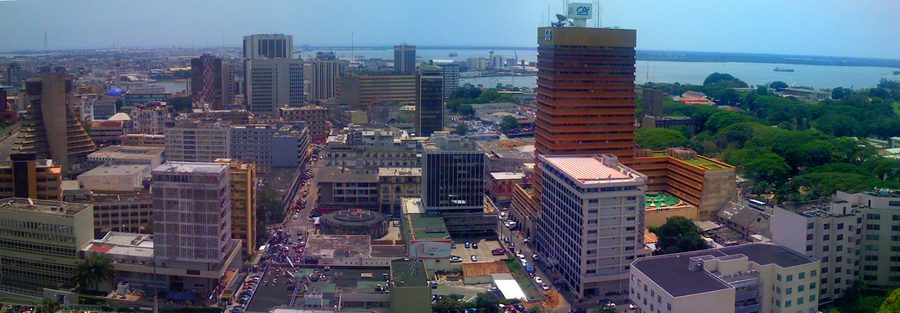 Abidjan’s Plateau skyline on the Ébrié Lagoon.
Photo: Zenman stitched by Marku1988 This panoramic image was created with Autostitch (stitched images may differ from reality) . via Source, CC BY-SA 3.0
Abidjan’s Plateau skyline on the Ébrié Lagoon.
Photo: Zenman stitched by Marku1988 This panoramic image was created with Autostitch (stitched images may differ from reality) . via Source, CC BY-SA 3.0
Quick facts
- Official capital: Yamoussoukro; main economic and transport hub: Abidjan.
- Côte d'Ivoire combines coast, lagoons, rainforest, and savanna.
- For families, the first question is worth asking: city base, coastal base, or a quieter inland stay?
Which base in Côte d'Ivoire is right for your trip?
If you are traveling with children or to several destinations, the location of your accommodation is often more important than the type of accommodation itself. In the urban area around Abidjan, routes, services, and city activities are most concentrated; on the southern coast, the focus is more on relaxed days by the water; inland, the calmer, more landscape-oriented character matters more.
City, lagoon, and good connections
For a first stay with good connections, there is a lot to recommend the city region around Abidjan. Lagunes and Songon-Agban also fit well if you want to include the lagoon-side surroundings. If you want to add a capital-city stop with a different focus, Yamoussoukro offers an inland alternative.
This city connection is especially helpful if you are looking for a hotel or apartment as a practical base for transport, excursions, and city life, not just a place to sleep.
Coast and lagoons for more relaxed days
If your travel plan is more about beach time, water, and a slightly slower pace, the southern coastal towns are the more obvious choice. Assinie stands for a quieter coastal and lagoon atmosphere, while Sud-Comoé adds the south as another coastal base.
Quieter western, northern, and inland regions
For slow, landscape-oriented trips, the broader inland and border regions remain interesting. This is not about a big city program, but about a quieter base with more room to breathe in your travel experience: Bas-Sassandra, Denguélé District, Dix-Huit Montagnes, Savanes District, and Vallée du Bandama District.
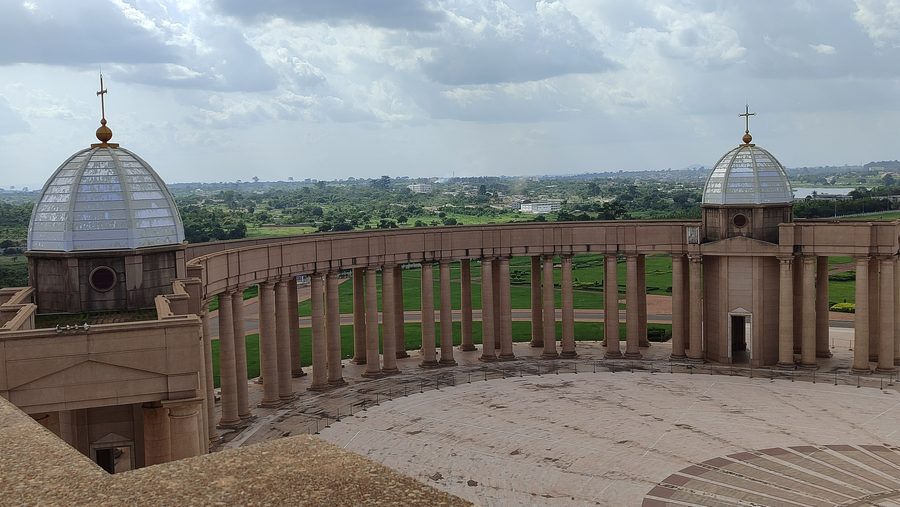
Yamoussoukro is therefore especially interesting as a capital-city and landmark stop, not as a beach base. For a road trip, it can be exactly the kind of stopover that makes the country’s character tangible.
What makes Côte d'Ivoire special as a travel destination
What stands out is the strong contrast between Abidjan as an urban lagoon setting, the southern coast with its lighter beach rhythm, and the quieter inland areas. That means you can experience the country very differently depending on your travel style: lively and service-oriented, relaxed by the water, or slower and more landscape-focused.
For families, this is practical because you are not only choosing between hotels and apartments, but also between a base with short everyday routes and a base that promises more peace and less city traffic.
Frequently asked questions about Côte d'Ivoire
Is Abidjan a good starting point for a first trip to Côte d'Ivoire?
Yes. Abidjan is the largest city in the country and the most important economic and logistics hub. If you need services and good connections, this is the clearest city base.
Which region is best if you are looking for beaches and calmer lagoons?
Most likely the southern coast, especially Assinie. There, the trip is better suited to beach and water time than to a purely urban program.
Should I use Yamoussoukro or Abidjan as my base?
Abidjan is the better choice for an urban main stay. Yamoussoukro is more suitable as an official capital stop with a landmark visit within a longer trip.


