
Accommodation in Thailand
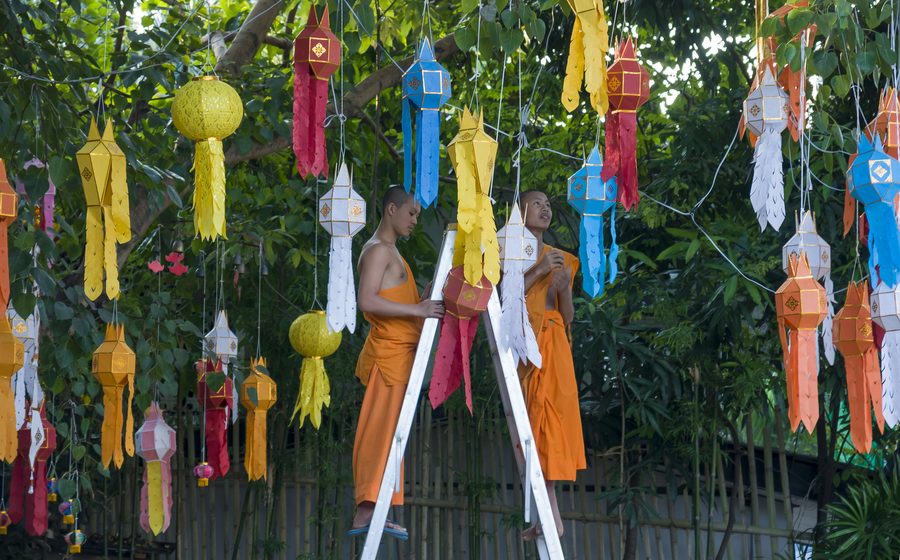 Buddhist monks installing lanterns in Chiang Mai.
Photo: CEphoto, Uwe Aranas via Wikimedia Commons, CC BY-SA 3.0
Buddhist monks installing lanterns in Chiang Mai.
Photo: CEphoto, Uwe Aranas via Wikimedia Commons, CC BY-SA 3.0
Thailand is, for families, above all a country of clear contrasts: Bangkok as a lively starting point or short stopover, the north with mountains, temples, and markets, and the south with islands, beaches, and sea. If you are traveling with children, a short route with two clear building blocks is often more relaxing than a full round trip.
Quick facts
- For visitors, Thailand can be neatly divided into Northern Thailand, Southern Thailand, and the islands.
- Northern Thailand combines mountains, temples, markets, and visible local culture.
- Southern Thailand is the region for islands, beaches, and the sea.
- For families, a short route with two clear building blocks often works better than many changes of location.
- Train and long-distance bus are genuine planning options, including sleeper cars.
- Chiang Mai is a central cultural and base city in the north.
How to read Thailand as a family destination
This country page helps you see Thailand not as an endless list, but as a trip with clear decisions: city or coast, north or south, one anchor or several changes. For families, the most important thing is that the daily rhythm works. City bases help on arrival and for short cultural stops, the north suits quiet days of discovery, and coastal or island bases slow the holiday down if you want more time by the water.
The north in particular shows well why Thailand is experienced so differently: here, landscapes, culture, and everyday scenes are closer together than in many pure beach destinations. That makes the region interesting if, with children, you prefer exploring together rather than staying in one place. Overland routes by train or long-distance bus also fit well if you want to divide the trip deliberately into manageable sections.
Bangkok, Chiang Mai, and Phuket as clear anchors
Bangkok is a sensible city component if you are planning a compact route and want to turn arrival or departure into a short city day. Bangkok is therefore especially suitable if you only want to include one urban stop.
Chiang Mai stands for the culture- and landscape-oriented Northern Thailand option. Here the trip becomes calmer and more visibly regional in its culture; that is why Chiang Mai is a strong anchor for families looking for temples, markets, and a clear inland focus.
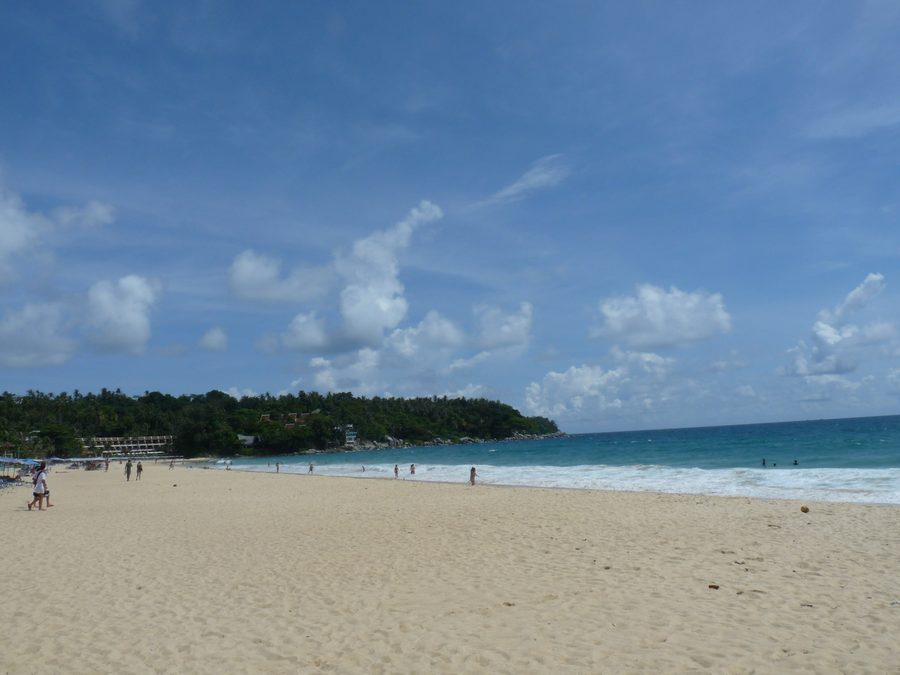
Phuket is the obvious south/island component for a slower coastal stay. If you want to deliberately focus the trip on the sea and longer days by the water, there is hardly a better choice than Phuket.
What this means for your accommodation
For accommodation in Thailand, the location within the travel itinerary often matters most: city bases are well suited to arrival and short stays, Northern Thailand to culturally dense days, and coastal or island bases to quieter holidays with more time at the sea. If you keep the route short and prefer two good building blocks over many changes, the decision between apartment, holiday rental, and hotel becomes much easier too.
The following selection is intentionally grouped by travel feel. This lets you jump more quickly to the part that suits your family, without having to work through a pure place list.
All other destinations in Thailand
The full destination selection remains available as compact navigation. Open the list if you are already looking for a specific place; for trip planning, the described anchors Bangkok, Chiang Mai, and Phuket are the main focus.

