
Accommodation in Jordan
Jordan is surprisingly diverse in a small area: in the north, greener hills and trips to ruins beckon; in the center are Amman, Madaba, and the country’s main connecting corridor; and in the south, Petra, Wadi Rum, and Aqaba come together. For families traveling with children, it is especially worthwhile to choose accommodation not just by location, but by route.
Quick facts
- The main destinations can be neatly organized into a north–south route.
- The north is a good fit for Jerash, Ajloun, and other hilly stops.
- The center connects Amman, Madaba, Mount Nebo, and the Dead Sea area as a cultural and transit zone.
- The south combines Petra, Wadi Rum, and Aqaba — in other words, ruins, desert, and sea.
- For families, a quiet, well-placed base is usually better than changing hotels often.
Which base is right for your family trip?
If you are planning Jordan with children, the first simple question is not “What is closest?”, but “What mix of experiences should shape the trip?”. For a relaxed pace, a clear north–south idea is often more comfortable than constant back and forth.
Amman is the practical urban base when culture, restaurants, and good connections are the focus. Madaba works well if you are looking for a slightly quieter hub from which several stops can be linked. The north is worthwhile if greener landscapes, ruins, and short excursions matter most. The south is the right choice when Petra and Wadi Rum are the major highlights. Aqaba is the best add-on if you want the trip to end with the sea and a calmer finale.
Culture, food, and shared breaks
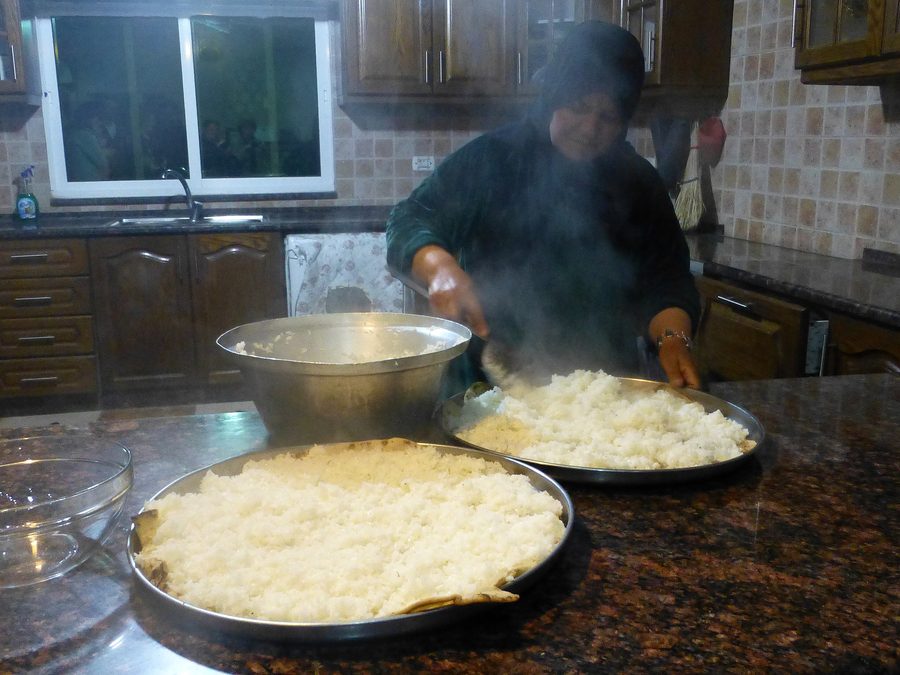
Jordanian cuisine is strongly shaped by Levantine influences and Bedouin traditions. For families, the especially appealing moments are the easy, shareable meals: mansaf as the best-known dish, knafeh as a sweet finish, and simple stops that help break up the pace of travel.
Outside the dining table, there are also many small cultural pauses that fit well into a family route: Amman has lively food districts, in the Ajloun area and in the Jordan Valley olive harvesting and tastings make a good reason for a calm stop, and Wadi Rum and Petra often combine food and overnight stays with a very distinctive local character. In this way, the trip gets enough everyday atmosphere between the major sights.
The regions at a glance
For the actual choice, the simple north–center–south logic helps. The following places each represent the same broad decision, even if the names look similar at first glance: Which area is the best base, for day trips, or for the next section of the route?
North: Ajloun, Ajloun, Irbid, Irbid Governorate, Jarash, Mafraq Governorate, and Aţ Ţayyibah are suitable for greener impressions, historical excursions, and a calmer start to the trip.
Center: Amman, Balqa Governorate, Madaba, Madaba Governorate, and Zarqa belong on the route around the central cultural and connecting corridor. Here, a base is often especially practical if you do not want to change places every day.
South: Kerak, Ma'an, Ma'an, and Wadi Rum stand for the journey south, where Petra, the desert, and longer legs shape the travel experience.
Coast: Aqaba and Aqaba provide the maritime counterpoint. If you want the trip through the interior, ruins, and desert to end more quietly at the Red Sea, add this section to the final part of the route.
Why the route changes the feeling of the trip
Jordan can work very well on a classic one- to two-week trip, as long as the stages are not scheduled too tightly. Especially with children, the journey feels more relaxed when you deliberately group the big contrasts: first the north or center, then the southern route with Petra and Wadi Rum, and at the end — if desired — Aqaba as a seaside section. That creates not just a list of places, but a clear sequence with a better family rhythm.
A central base around Amman or Madaba helps especially when you want to balance culture and travel distances well. Those looking for nature and ruins in the north can travel more slowly there. Those who want the strongest change of scenery should make the south the focus, with desert and rock landscapes. That very decision is what turns a Jordan trip into more than just a chain of accommodations.
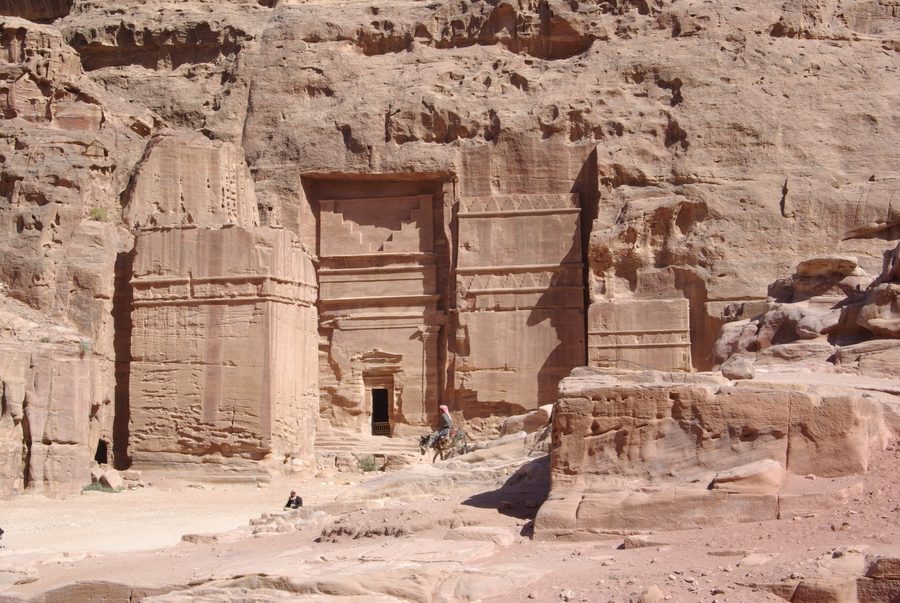
Petra represents the great southern contrast, because culture, landscape, and travel rhythm come together here very distinctly. Combined with Wadi Rum and — depending on the plan — Aqaba, it creates a route that leads from the rocks to the water.
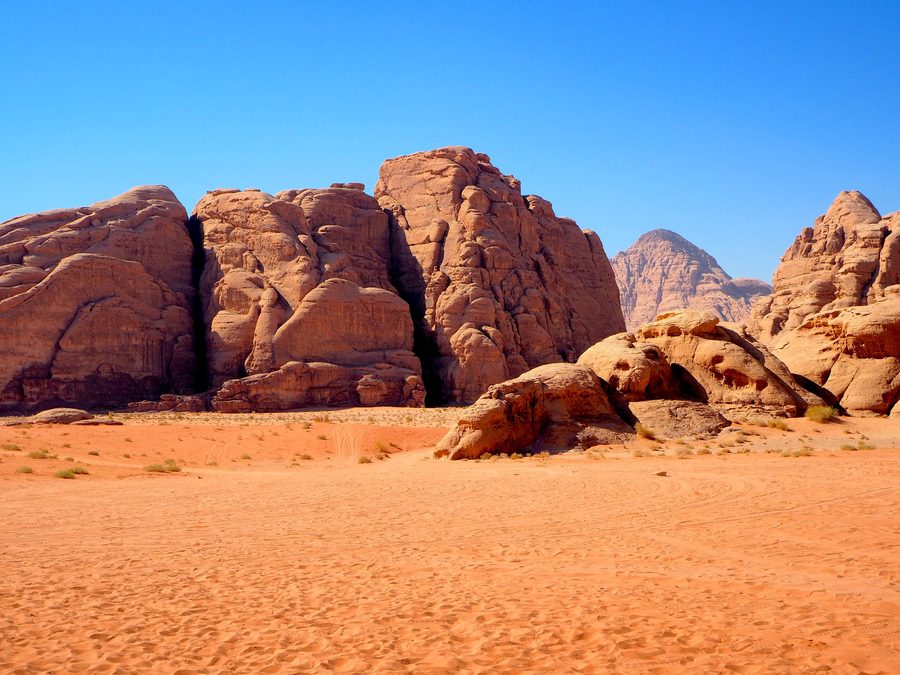
Wadi Rum brings perhaps the most striking shift in mood of the whole trip: instead of a city or the coast, the desert stay is at the center, and one night there can be the most memorable part of the route for families.
FAQ
Which base is often easiest for a Jordan trip with children?
Amman or Madaba, because culture, food, and travel distances can be combined well there and the route remains more manageable.
What is the north especially good for?
For greener landscapes, Jerash, Ajloun, and a calmer start with mostly short excursions.
When is Aqaba especially a good fit?
When the trip after Petra or Wadi Rum should still end with a seaside section on the Red Sea.


.jpg)
