
Discover Livnim: Surrounding nature and archaeology in the Northern District
Accommodation in Livnim
Livnim is located northwest of the Sea of Galilee and above Nahal Amud. These provide two geographical reference points for getting your bearings in the destination. The nearby Nahal Amud Nature Reserve is another local attraction; Tel Hazor and Tel Megiddo offer an archaeological perspective on the broader destination of the Northern District. If you are looking for a vacation rental, you can consider nature nearby and regional history as distinct focuses for planning your trip.
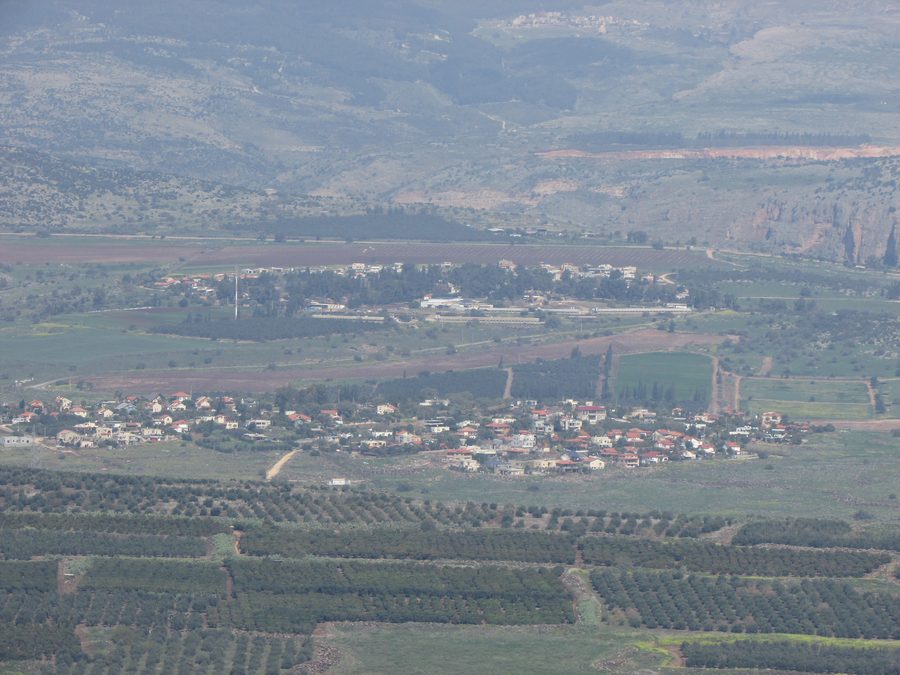 Blick vom Berg Arbel auf Livnim und das nahegelegene Hukok.
Photo: עדירל via Wikimedia Commons, CC BY-SA 3.0
Nature and cultural heritage around Livnim
One entrance to Nahal Amud Nature Reserve is where Road 8077 crosses the stream; there is an organized parking area at this point. The upper reaches of Nahal Amud are a nature reserve developed for visitors, and admission is charged. Check the current access and fee conditions before your visit.
The stream flows year-round. Its natural features include rock pools and lush vegetation typical of stream banks. The reserve also contains grain mills and caves associated with prehistoric people. Thus, the watercourse and riverside vegetation sit alongside tangible evidence of cultural history and the prehistoric past.
Archaeology in the broader destination of the Northern District
Tel Hazor is a biblical tell with significant remains of a city associated with the Bible. The visit focuses on the upper city. Solomon’s Gate, a gate with six chambers and two towers, dates to the 10th century BCE. The Canaanite palace was used by the kings of Hazor in the 14th and 13th centuries BCE. The Late Bronze Age palace is described as the most elaborate in Israel and one of the most significant in the Levant.
The waterworks also give Tel Hazor a distinctive character: the excavated shaft is 45 meters deep. Three-meter-wide steps are carved into the walls of the vertical shaft in the water system. Significant remains of an underground water collection system illustrate sophisticated engineering, adapted to the geography, for storing water. The fortifications are considered the finest example of their kind in the area from southern Turkey to the northern Negev.
Tel Hazor National Park can be reached from the north and south via Road 90 toward Ayelet Hashahar. Checking your navigation app before setting out can help with directions.
Tel Megiddo is one of three tells that preserve significant remains of cities associated with the Bible and are closely linked to biblical events. The Early Bronze Age temple complex is exceptional in terms of the number of its temples, the continuity of its cultic activity, and its documented ritual practices. The orthogonal Iron Age city plan has few parallels in the Levant.
The archaeological highlights differ considerably: at Tel Hazor, the upper city, gates, palace, and waterworks draw attention to construction and water engineering; Tel Megiddo combines an exceptional temple complex with a rare city plan. When choosing your vacation rental in Livnim, you can consider whether the nearby surroundings of Nahal Amud or the broader archaeology of the Northern District should shape your stay.
Discover more destinations: Gesher Haziv, Yarka, Dalton, Ra'anana, Ein Tzurim, Kibbutz Snir, Gevulot, Yeroẖam.
For the broader travel overview: Israel.

