
Discover Beit Oved
Accommodation in Beit Oved
Beit Oved can be explored through its hills and a founding story closely linked to large agricultural colonies. A memorial to the fallen sons of Bet Oved stands on a hill, with views across the surrounding area. Remains of Khirbat Lulya were also found on the hill where Beit Oved was built. These features offer different ways to approach the place: the historical idea behind the settlement’s founding, older traces on the hill, and a memorial site with views of the surroundings.
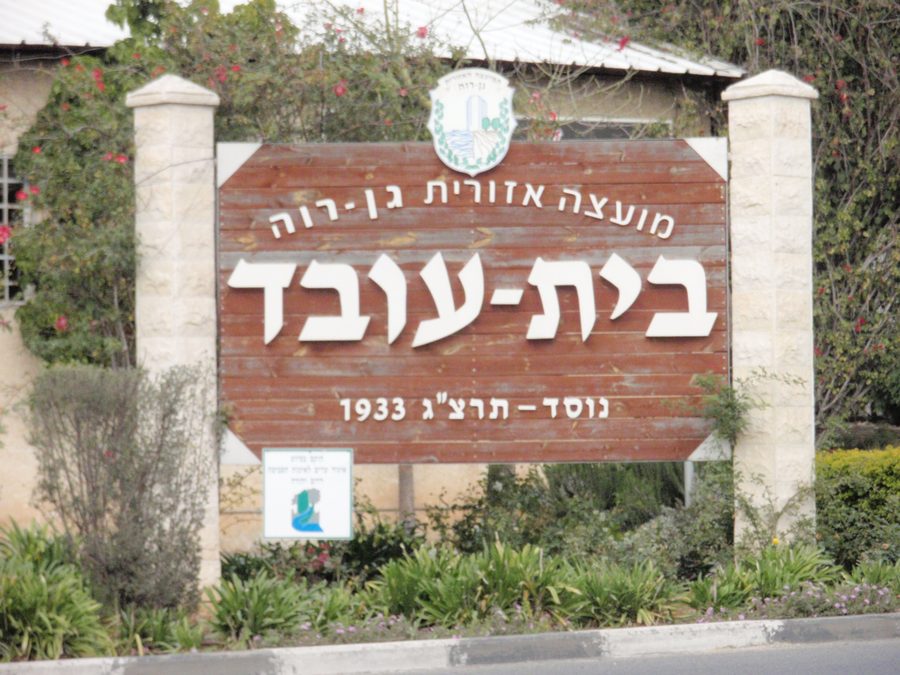
A founding with regional ties
Beit Oved was founded as part of the “Settlement of the Thousand” initiative. Its goal was to establish workers’ settlements near large agricultural colonies. The founding of the place was therefore based on a specific idea of where workers’ settlements should be established: in close geographical proximity to large agricultural colonies. For travellers, this goal makes the story of the settlement’s origins more tangible than a simple statement of when it was founded. It connects the development of the place with an approach to settlement that explicitly linked workers’ settlements and agricultural colonies. Those interested in a destination’s cultural side can start here: Beit Oved’s history includes not only the place itself, but also the idea behind its founding.
Older traces on the hill
The settlement’s founding is not the only historical layer. Beit Oved was built on a hill where remains of Khirbat Lulya were found. It is worth keeping the two topics distinct: the “Settlement of the Thousand” initiative explains the context in which Beit Oved was founded, while Khirbat Lulya represents an older historical layer on the hill. This creates a contrast in time between the settlement approach and the remains that were already there, without equating the two stories. The hill thus provides a tangible point of reference for distinguishing between the place’s different historical perspectives.
Memorial and views
The memorial to the fallen sons of Bet Oved stands on the highest hill in the area and offers views of the surroundings. Reaching the memorial requires walking uphill; the memorial is partially accessible. Allow for the climb and bear its partial accessibility in mind if you plan to visit the memorial site. Views and remembrance come together here in a specific place, where the conditions of the route are just as important to planning as the views across the surroundings.
Choosing Beit Oved as a destination
These different approaches highlight different aspects: those who want to understand how a place came about can start with the founding initiative; those looking for a specific memorial site with a view will find one on the highest hill, reached by walking uphill and with partial accessibility. This contrast makes choosing the place more tangible. When looking for a holiday rental in Beit Oved, you can consider whether the settlement’s history or a visit to the memorial will play a greater role in your stay. This way, your choice can reflect specific aspects of the place: a historical approach to its founding and a memorial site whose access should be taken into account when planning.
Discover more destinations: Ganei Tikva, Hagor, Ramot Meir, Gedera, Shoham, Kfar Ma'as, Hofit, Sawjion
For the wider travel overview: Center District.

