
Holiday apartment in Seeheim
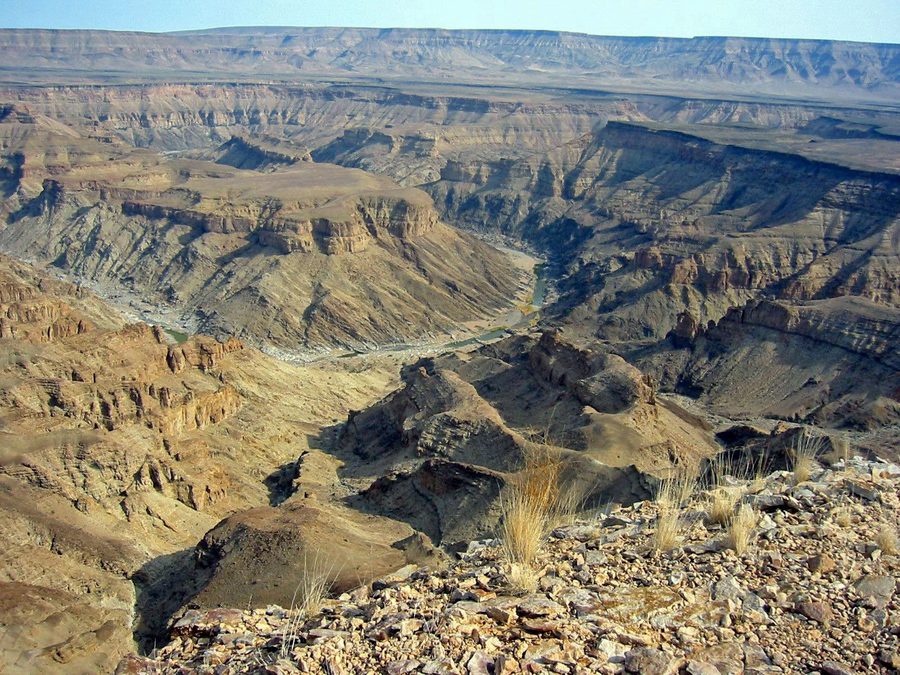 Weiter Ausblick über den Fish River Canyon in der Karas-Region.
Photo: Thomas Schoch via Wikimedia Commons, CC BY-SA 3.0
Weiter Ausblick über den Fish River Canyon in der Karas-Region.
Photo: Thomas Schoch via Wikimedia Commons, CC BY-SA 3.0
Seeheim is not just any overnight stop: the small settlement on the Fish River in the Karas region tells of the military, the railway, and the transformation of a historic travel route. Anyone looking for a travel component steeped in history in southern Namibia can get to know a place with its own character here – and at the same time check whether accommodation on the B4 fits the planned route and their own mobility.
Quick facts about Seeheim
- Location: Seeheim is located on the Fish River in the Karas region on the B4 toward Lüderitz.
- Local history: The settlement was founded in 1896 as a military post, received a railway bridge over the Fish River in 1907, and later became a railway junction.
- Transport changes: The rerouting of the B4 in 1974 significantly changed Seeheim’s former role as a through and overnight stop.
- Landscape context: In the regional context of Seeheim, views of the Fish River Canyon and marked trails along the canyon rim are described.
Between the Fish River and railway history
The history makes Seeheim interesting for travelers who want not only to see landscapes but also to understand the development of a place. From the post founded in 1896 grew a place whose importance increased through the railway. The bridge over the Fish River and its later function as a railway junction are among the defining chapters of this development.
For families, this can become a tangible moment of discovery: Seeheim stands for the question of how people, goods, and travelers once connected southern Namibia. At the same time, you should not equate historical references with an automatically accessible museum or sightseeing offer. No documented statements about preserved buildings or regular visits are available here.
Landscape experience in the regional surroundings
The Fish River Canyon is one of the landscape references that can be associated with Seeheim. A provider with a Seeheim address describes wide views and marked trails along the canyon rim. This information refers to a regional offer and is not an indication that the canyon is located in the town or can be reached easily from the town center.
If you want to include this landscape component in your plans, check the exact location, access route, and current availability in advance. Exact distances, travel times, and special suitability for children have not been documented. This keeps the planning realistic without turning a regional connection into a short local excursion recommendation.
Seeheim as a stopover or place to stay
The rerouting of the B4 took away Seeheim’s former direct through-traffic function. That is why the place is especially suitable for travel planning that deliberately includes local and transport history as well as the southern Namibian landscape. If, on the other hand, you want to plan in many current offers in the town, you should check particularly carefully before booking what services and infrastructure are actually available.
For choosing a holiday apartment or holiday home, this means: what matters less is a general promise about the accommodation than its classification within your travel itinerary. Match the location to your route, your own mobility, and the question of whether you are looking for a stay focused on local and transport history or a short historical stopover. Current information on road conditions, petrol stations, shopping options, public transport, facilities, prices, or availability is not part of this classification.
If you want to compare Seeheim with other places and accommodation options in the region, the next step is the overview Karas. There you can place the small town in the broader regional context without obscuring its special features with undocumented current offers.
For whom Seeheim is particularly suitable
Seeheim is a suitable consideration for travelers who want to combine historic townscapes, landscape, and a deliberately planned route. Families can use the local history as a shared opportunity for conversation and discovery, but should not base their daily planning on unverified short distances or spontaneous services. Before booking, therefore, check whether the desired flexibility, self-catering, and mobility fit this historically shaped travel component.

