
Accommodation in Equatorial Guinea
Accommodation in Equatorial Guinea
Equatorial Guinea is a destination best understood through its route: Bioko on one side, the mainland on the other. That is exactly why choosing a base has an immediate effect on the whole stay. If you are traveling with family or combining several stages, it is especially worth separating island, coast, and inland deliberately instead of bundling everything into a single base.
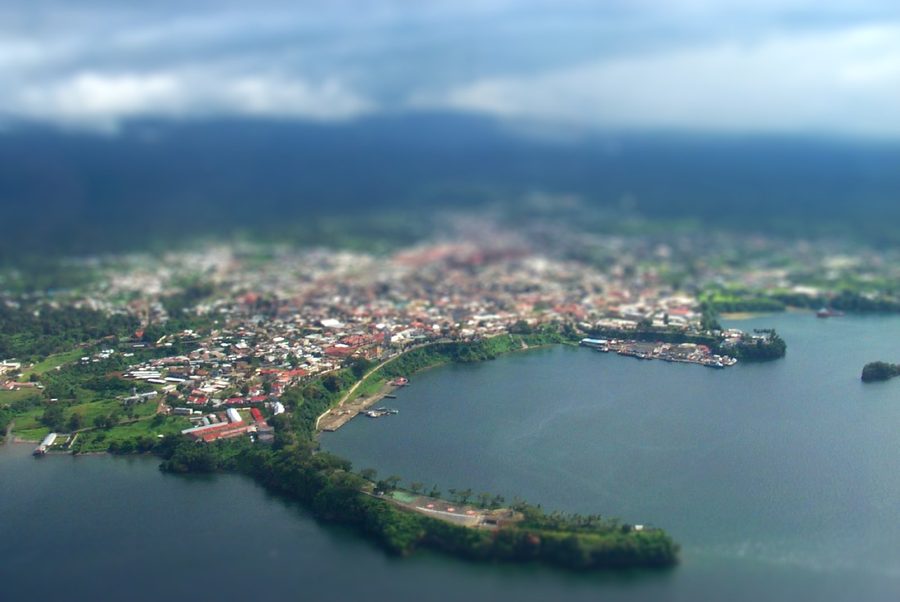 Malabo Harbour on Bioko Island, the capital’s waterfront setting.
Photo: Wapster via Wikimedia Commons, CC BY 2.0
Malabo Harbour on Bioko Island, the capital’s waterfront setting.
Photo: Wapster via Wikimedia Commons, CC BY 2.0
Quick facts about Equatorial Guinea
- Equatorial Guinea can be understood as a mix of the island of Bioko and the mainland.
- Malabo is on Bioko and, for many trips, is the obvious starting point there.
- Bata is the main coastal base on the mainland.
- Djibloho is on the mainland; it is situated in Ciudad de la Paz.
Malabo: island base for Bioko
Malabo is the obvious choice if your trip begins on Bioko or if you want to keep island travel distances short. This is especially useful if you do not want unnecessary changes between island, coast, and inland. As a base for a first impression of the country, Malabo is therefore the clearest island starting point.
Bata: coastal base on the mainland
Bata is the practical choice if your trip begins on the continental side and the coast sets the tone. This works well if you are planning Equatorial Guinea as a mainland trip and want a base that functions without detouring via the island. For longer routes, Bata is the obvious solution if you want to use the coast as your starting point.
Djibloho: inland mainland option
Djibloho offers a different mainland perspective: inland rather than close to the coast, with Ciudad de la Paz as its reference point. This is especially interesting if you want to plan your stages differently and do not want to choose only between island and coast. As a base, Djibloho can make sense if your route is meant to stay on the mainland without being tied to the coast.
What makes the trip tangible on the ground
In the larger cities, museums focused on culture and history add more context to your trip. A small culinary anchor is Malamba, a sugarcane drink that makes the stay feel more immediate. There are also many restaurants in Malabo and Bata, which makes city stays feel like practical and lively stops.
For choosing a location, this means: the best accommodation here is less a question of hotel category than of travel direction. If you want to combine island, coast, and inland with as little transfer effort as possible, the decision is often made already with the first leg. That is exactly where comparing Malabo, Bata, and Djibloho helps the most.
Which base fits which trip?
If you want an island start, Malabo is the easiest reference point. If your trip is clearly aimed at the mainland, Bata is the pragmatic coastal choice. If you prefer to travel inland, Djibloho offers a different mainland perspective. For families, the best solution is usually the one that reduces unnecessary transfers between these three zones and keeps the daily rhythm calmer.
Frequently asked questions about Equatorial Guinea
Is Equatorial Guinea more of an island trip or a mainland trip?
Both. For planning, it helps to see the country as a mix of Bioko island and the mainland; this makes the island, coastal, and inland bases clearly different.
What is Malabo suitable for as a base?
Malabo is the obvious starting point for Bioko-oriented trips. If the island is your main focus, this is the most logical base.
Why is Bata a different base from Malabo?
Bata is the coastal base on the mainland, while Malabo is on Bioko. Bata is therefore oriented more toward the continental side.
What makes Djibloho different as a base?
Djibloho is on the mainland and is situated inland. That works if you are looking for an alternative to the coast or the island.
What cultural or food-related tips are tangible on site?
In the larger cities you will find museums with culture and history themes. As a local taste reference, there is also Malamba, a sugarcane drink that makes the trip feel more tangible.

.jpg)