
Ice fishing in Scandinavia: winter travel and safety
Find accommodation
Safety comes before the fishing plan
Ice fishing depends on the exact lake, weather and day. Ice thickness can vary across one water, especially near inflows, outlets, reeds, bridges and moving water. A number quoted in an old report is not a safety clearance. Check current local information and do not step onto unfamiliar ice alone. If the conditions are uncertain, stay on land and use the cottage or a winter excursion as the alternative.
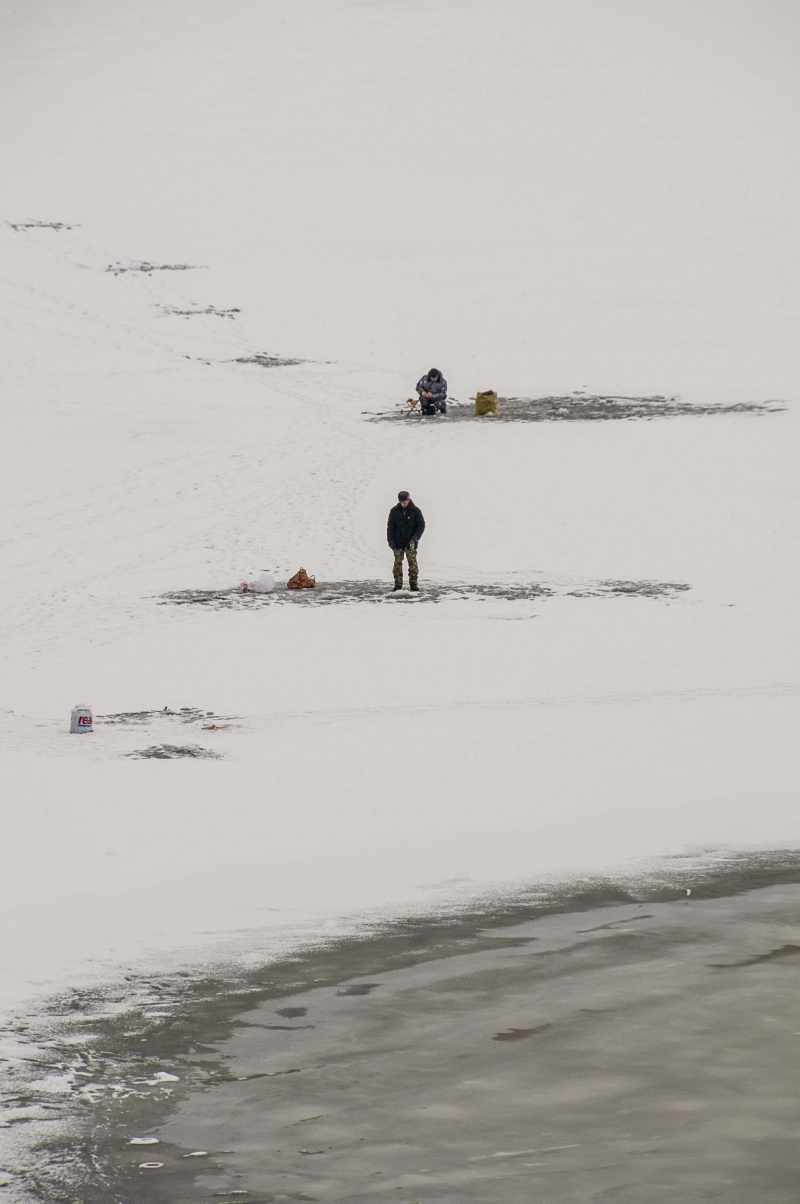 Two people sit and stand at fishing spots on a snowy ice surface.
Photo: Alesia Belaya
Two people sit and stand at fishing spots on a snowy ice surface.
Photo: Alesia Belaya
Choose the country and lake together
Sweden, Norway and Finland offer very different distances, winter roads, lake access and local fishing arrangements. Start with a named water and the responsible manager rather than the country name alone. Confirm whether a fishing card is needed, which methods are allowed, where access is permitted and whether the planned activity is possible on the travel dates. The fishing-holiday section helps with the wider trip; current lake rules remain decisive.
Prepare for cold and changing weather
- Use warm, windproof layers, waterproof footwear and spare dry clothing.
- Carry communication equipment, a first-aid kit and the locally recommended rescue equipment.
- Tell someone the route, return time and meeting point.
- Allow for short daylight, snow, wind and delays on winter roads.
Never treat a fishing shelter, a nearby cottage or a vehicle as a substitute for an emergency plan. Thaw, wind, current or fresh snow can change the assessment quickly. Leave the ice by a safe, familiar route when conditions deteriorate.
Choose a cottage for winter access
Look for reliable access, parking, heating, a kitchen and a place to dry clothing. A cottage close to the lake is useful only when the route is permitted and safe. Ask how keys are handed over in winter, whether the access road is cleared and where wet clothing and equipment can be stored. A flexible booking plan should include a rest day and a land-based alternative.
Travel with children
Children should only join an ice-fishing outing when the responsible adults have confirmed the conditions, equipment and supervision. The safer choice in uncertain weather is a day on land. Short walks, museums or other winter activities can keep the trip enjoyable without adding unnecessary ice risk.
Common questions
Is there a general safe ice thickness?
No single figure replaces a current, local assessment. Water movement, weather, snow and the intended load all matter.
Do I need a fishing card?
Many waters require one, but the conditions vary. Check the current rules for the exact lake and method.
What accommodation is suitable?
Heating, winter access, parking, a kitchen and drying space are practical priorities.
What should I do if the ice becomes unsafe?
Stop, leave by the safe route and follow local warnings. A land-based alternative is the correct plan.
