
Fly fishing on holiday: choose river, equipment and accommodation
Find accommodation
Start with the water and the rules
Fly fishing is a method rather than a single type of destination. A small stream, a broad river and a lake require different equipment, casting space and safety decisions. Before choosing a cottage, identify the specific water, permitted stretch and access point. The fishing-holiday overview is a useful starting point; the local operator or authority remains responsible for current permits, closed seasons and method restrictions.
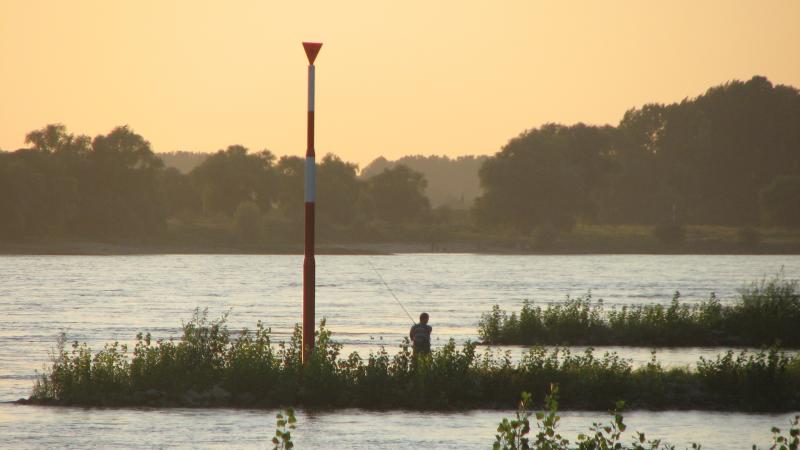 An angler stands at sunset with his rod on a wide river.
Photo: Rainer Lenk
An angler stands at sunset with his rod on a wide river.
Photo: Rainer Lenk
Choose a suitable stretch
Beginners usually benefit from an accessible bank, clear access and a course or local guide. Experienced anglers may give more weight to flow, depth, casting room and the character of the river. Trout and grayling are not available under the same rules in every water, and a water described in an older report may have different access or conservation requirements today. Confirm the precise section before travelling.
Equipment and wading safety
- Match rod, line and flies to the water and the permitted method.
- Use non-slip footwear and treat waders as access equipment, not as a guarantee of safety.
- Never enter deep or fast water without a safe assessment, a clear return route and suitable support.
- Carry the permit, a charged phone, a small first-aid kit and dry spare clothing.
High water, slippery banks, thunderstorms and poor visibility are reasons to stay ashore. A short walk or another planned activity is better than forcing a fishing day in unsafe conditions.
Find accommodation that fits the routine
A cottage does not need to stand directly beside the water. A short, permitted route, parking, a secure place for rods and waders, and an agreed way to dry clothing are often more useful. Ask whether wet equipment may be cleaned or dried and whether the access route is suitable for the vehicle and group. Families and mixed groups should also check walks, excursions or indoor alternatives for non-anglers.
Plan the season with flexibility
Water level, temperature, weather and local protection periods affect the practical choice of fishing day. Keep the first day for orientation: check the access, water condition and current instructions before casting. A second water or a non-fishing plan gives the trip resilience when a river is closed, swollen or difficult to reach.
Common questions
Is fly fishing suitable for beginners?
Yes, when the water is accessible and a course or guide is available. The method, current and local rules should be explained before entering the water.
Do I always need waders?
No. Bank fishing may be safer and simpler. Waders are useful only when the access and conditions justify them.
Can I fish anywhere on a river?
No. Ownership, conservation areas, closed stretches, permits and marked access routes must be respected.
What makes a cottage practical?
Dry storage, permitted cleaning, parking and a manageable distance to the authorised water are more important than a general promise of being “close to fishing”.
