
Lakes in Italy
Find accommodation
At a glance
For current destination information, check the official Italia.it travel portal.
An Italian lake holiday can combine swimming, culture, walking, mountain scenery and good food. The right choice depends on the exact shore location, the distance to a bathing area, access to towns and whether a car is needed for excursions. Start with the practical guide to choosing a holiday home by a lake, then compare the region with your preferred pace of travel.
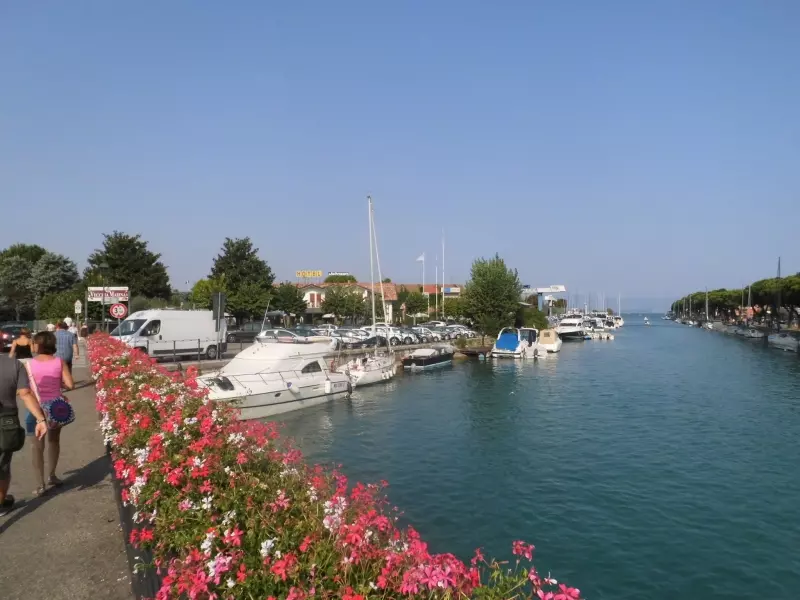 Boats on the waterfront of Peschiera del Garda on Lake Garda.
Photo: Bernd Herman, neandertours.com
Boats on the waterfront of Peschiera del Garda on Lake Garda.
Photo: Bernd Herman, neandertours.com
- Italian lakes differ greatly in climate, landscape, traffic and the distance between shore and excursions.
- Lake Garda combines water sports, towns, mountains and family activities.
- Lake Como and Lake Maggiore link lake scenery with villas, gardens, mountains and cultural towns.
- Lake Iseo, Lake Trasimeno and Lake Bolsena offer different settings that can be quieter than the busiest Alpine lakes.
- A lake view does not automatically mean direct access to the water, a beach or a parking space.
- In midsummer, heat, traffic and limited parking can affect the daily plan.
Lake Garda, Lake Como or Lake Maggiore?
Lake Garda is particularly versatile. The mountainous northern shore suits walking, climbing and wind sports, while the southern shore has flatter landscapes, family activities and a broad choice of towns. Before booking, compare the property with the beaches, routes and excursions you want to use; the lake is large enough for daily journeys to become significant.
Lake Como combines steep scenery, lake towns, villas and gardens. A property near a ferry connection can make some excursions easier, while a hillside location may offer a view but require more effort for shopping and access. Lake Maggiore links the water with towns, gardens and mountain areas. The right shore depends on whether you prefer cultural visits, swimming, walking or a quieter base.
Lake Iseo, Lake Trasimeno and Lake Bolsena provide other landscapes and travel rhythms. They may suit travellers who want water and excursions without choosing one of the most heavily visited Alpine centres. Check the services and transport options around the exact property rather than relying on the lake name alone.
Swimming, boating and day trips
For swimming, confirm whether a beach, a designated bathing area or a usable public shore is nearby. Not every shore is flat, sandy or suitable for children. Local rules can apply to boats, paddleboards and sailing, and protected areas may restrict access or launching points.
Plan day trips around realistic road, ferry and parking times. A property close to a town can make restaurants and shopping easy, while a rural house may provide more space and peace. Travellers who want mountain excursions should also allow for gradients, winding roads and changing weather.
Accommodation and equipment
A listing with a lake view is not necessarily on the water. Slopes, roads and private plots can separate the house from the shore. Check the actual path, the gradient, the parking arrangement and whether a garden, jetty or boat berth may be used.
For families, look for shade, safe outdoor space, a practical kitchen and manageable distances to shops and bathing. For active holidays, secure storage for bikes or water equipment can be more useful than a panoramic view. A property with heating and comfortable indoor space remains valuable outside the hottest months.
Arrival and mobility
A car is convenient for remote shores and mountain excursions. On journeys through northern Italy, check toll routes, tunnels, urban environmental zones and access restrictions before departure. In towns, parking can be limited, particularly in July and August.
Train, bus and ferry services can reduce car use around some lakes, but the final route to a holiday home still needs to be checked. For a late arrival, confirm the exact address, lighting, key handover and the route from the main road.
Travel season and heat
July and August are popular for swimming but are also hot and busy. June and September can offer warm days with less pressure on roads and facilities. Spring and autumn suit culture, walking and cycling, although some bathing services and seasonal businesses may operate on reduced schedules.
Choose the travel dates and property according to the daily activities you actually want to undertake. Around the larger lakes, a convenient base can save more time than a remote property with a better view.
Frequently asked questions
Which Italian lake is suitable for families?
Lake Garda offers many different shore areas and excursion options. Lake Maggiore and Lake Iseo can also work well when bathing access, paths and accommodation location are checked carefully.
Where can you combine a lake with mountains?
Lake Garda, Lake Como and Lake Maggiore all offer mountain scenery. Compare travel distances, gradients and access to the activities you want to do.
Is a car necessary at an Italian lake?
It depends on the shore location. Ferries, trains and buses can help in some areas, while remote properties and mountain excursions are usually easier by car.
What should be checked before booking?
Confirm the actual water access, bathing area, parking, route to shops, equipment and the arrangements for a late arrival.
