
Haczów: Wooden Architecture and Park History
Accommodation in Haczów
Haczów offers several concrete ways to explore local history: its Gothic wooden church, late medieval church paintings, the Haczów Pietà, and the manor park. The architectural forms, image motifs, and remnants of the historic park design give the place a multifaceted cultural character.
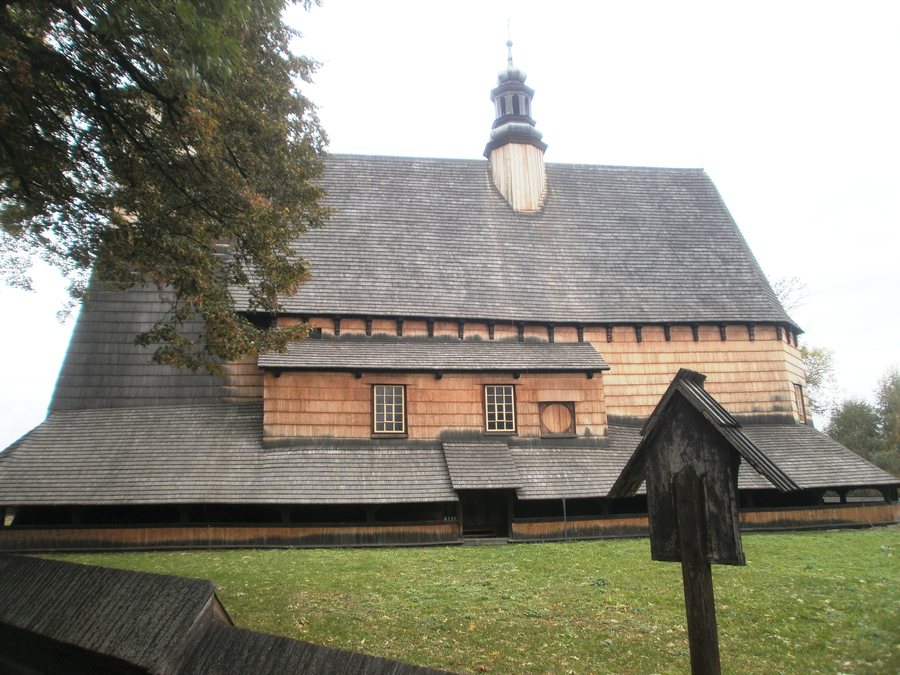
Wooden Architecture and Church Paintings
The Gothic wooden church in Haczów dates from the 14th century. No nails were used in its construction; instead, wooden fasteners were used. This construction principle makes the building’s history tangible through a specific detail: wooden joints define the structure, rather than nails. Those who enjoy exploring historic architecture through individual features will find an accessible way in here.
A guided visit is available by prior reservation at 534557009. The visitor information is dated June 1, 2022; confirm the arrangements again before your visit. Plan the tour as a scheduled activity.
Inside the church, late Gothic polychromy from the late 15th century depicts scenes from the Old and New Testaments, saints, and a monumental image of Saint Christopher. Polychromy refers to multicolored decoration; here, it brings together a variety of image motifs. Alongside the construction, the religious imagery is therefore a central focus of a visit to the church. For families who enjoy exploring history through concrete examples, the wooden construction and the depicted scenes offer different starting points for discussion.
The Haczów Pietà and Its Dimensions
The Haczów Pietà dates from around 1400 and is 70 cm high. Together with the explicitly monumental image of Christopher, it offers a comparison of scale between two works of religious art: here, the Pietà’s specific height; there, the monumental image in the church’s polychromy. This makes it possible to explore Haczów’s art history not only through the works’ dates, but also through their different dimensions of representation.
Manor Park: Historic Design and Buildings
The manor park in Haczów was created approximately between 1755 and 1800. Remnants of its historic design have survived; the park also provides a setting for the historic buildings: the manor house, outbuildings, chapel, and orangery. The park design and the buildings offer two connected perspectives on the site: traces of the former grounds and the buildings framed by the park. The approximate date provides a timeframe for the park’s creation.
Most of the outdoor events and concerts held in Haczów take place in the manor park. An event experience may therefore shape your stay alongside the park’s history. If you want a particular concert or outdoor event to be part of your trip, check the relevant dates when planning.
Plan Your Stay Around Your Interests
When choosing a holiday apartment in Haczów, it helps to decide first what you would like to focus on. If you are interested in the church’s art, the guided tour, which must be reserved in advance, provides a concrete point around which to plan; if you plan to attend a concert, your schedule will depend on the event date. Compare the two dates if you would like to include both in your stay. This lets you combine your search for a holiday apartment with your planned cultural activities.
These themes offer different ways to get to know Haczów: the church’s construction and image motifs lead into its history, while the manor park brings together park design, historic buildings, and outdoor events. Whether you focus your stay more on church art or on the park and events gives your trip planning a clear direction.
Discover more destinations: Humniska, Jabłonka, Brzozów, Krzemienna, Ropa.
Back to the main travel overview: Brzozów.

.JPG)