
Wołomin: Museum, Memorial Walk and Resort History
Accommodation in Wołomin
A wooden summer house, a memorial walk and preserved summer villas offer different ways to discover Wołomin. The town’s history encompasses both its former role as a resort and its memorial sites and cultural institutions. When planning your trip, it is therefore worth considering which of these themes you want to shape your stay.
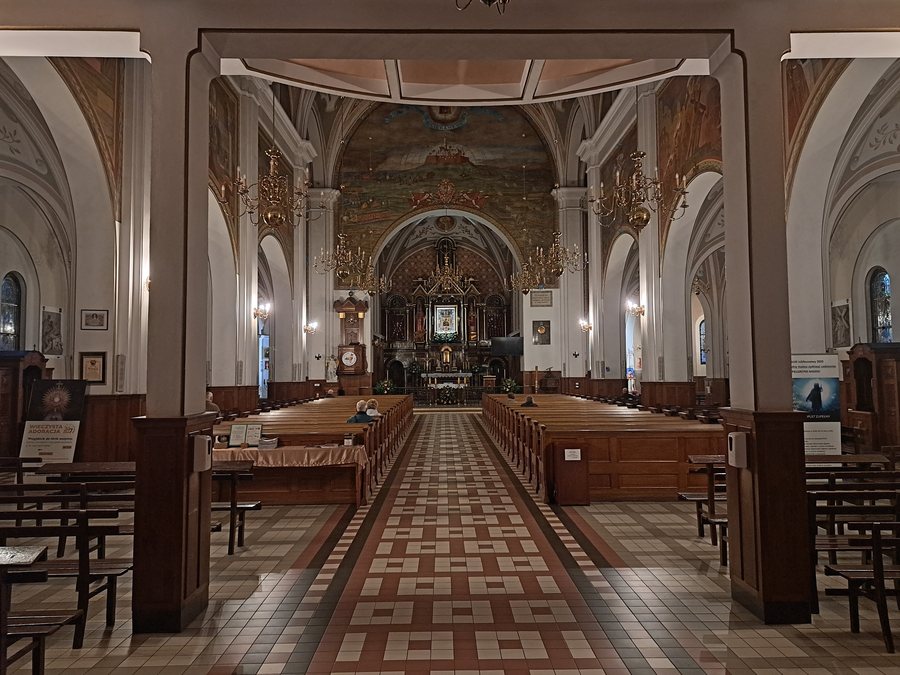 Wołomin Church of Our Lady of Częstochowa - interior
Photo: Olowirnik via Wikimedia Commons, CC BY-SA 4.0
Wołomin Church of Our Lady of Częstochowa - interior
Photo: Olowirnik via Wikimedia Commons, CC BY-SA 4.0
A summer house as a historical anchor
The Museum of Zofia and Wacław Nałkowski in Wołomin is housed in a wooden summer house commissioned in the late 19th century by the prominent geographer and publicist Wacław Nałkowski (1851–1911). The house is known as “Dom nad Łąkami”; the museum opened in 1992. Here, the story of a particular building meets the biography of its builder. Those interested in architecture and local history will find it a distinctive point of reference when looking for a holiday rental in Wołomin.
Memorial routes and resort history
A memorial walk in Wołomin takes visitors to places connected with the events and people that shaped the history of the town and Poland. This offers another perspective alongside the individual museum building: the walk links several memorial sites with broader historical contexts. When planning your trip, you can consider this perspective alongside the history of the buildings and the museum.
During the interwar period, Wołomin was known for its summer recreation and spa qualities, as well as its distinctive pine microclimate. The town was also an attractive destination for leisure and recreation for Warsaw residents. Some of the summer villas and residences built at the time have survived to this day, recalling Wołomin’s years as a resort. The story of the summer house from the late 19th century and the architectural traces of the later resort era thus represent different historical chapters.
Cultural venues in the Wołomin destination
The Stara Elektrownia in Wołomin is now the Wołomin Activity Centre, a venue for meetings, workshops, concerts and other cultural events. A 2024 report describes courses regularly offered there for children, young people, adults and seniors. This gives cultural life a different focus from the historic buildings: here, the emphasis is on community and cultural activities.
Other attractions highlight different periods. Within the wider Wołomin destination, the Warsaw–Saint Petersburg Railway building on Żelazna Street dates from 1863. Also within the wider Wołomin destination, Villa Laurentium and its garden date from around 1920. Together, these two sites represent railway heritage and villa architecture.
The wider Wołomin destination also includes the Tourist and Historical Information Centre in Ossów. It has a tourist information office and an exhibition area, as well as a cinema hall that can also be used for conferences, multimedia touchscreens and a virtual presenter. This means the range of cultural and historical topics extends beyond the museums and buildings in Wołomin.
Nature and choosing your holiday rental
As a landscape feature, the Białe Błota peat bog and the adjoining forests are among the most valuable natural areas in the Wołomin municipality. Part of the municipality is included in the Warsaw Protected Landscape Area. If you need specific information about the boundaries of protected areas, check current planning documents.
This way, you can base your choice on the experiences you are looking for without turning the different themes into a fixed sightseeing itinerary.
Discover more destinations
Discover more destinations: Nowe Załubice, Cegielnia, Zawady, Radzymin, Tłuszcz, Trojany, Zielonka, Słupno.
Back to the main travel overview: Wołomin.

