
Discover Wola-Chojnata
Accommodation in Wola-Chojnata
Wola-Chojnata offers a clear reason to travel if you are interested in architecture, a palace complex and a local connection to fish. At its centre is a Neo-Renaissance palace; a brick granary is part of the complex and stands next to it, while fish ponds lie opposite. There is also a restaurant in the palace. This combination gives you several distinct points of interest: architecture, another type of building, fish and regional orientation. When planning your visit, it is worth deciding first whether architecture, the culinary connection or the endpoint of a regional route should shape your stay.
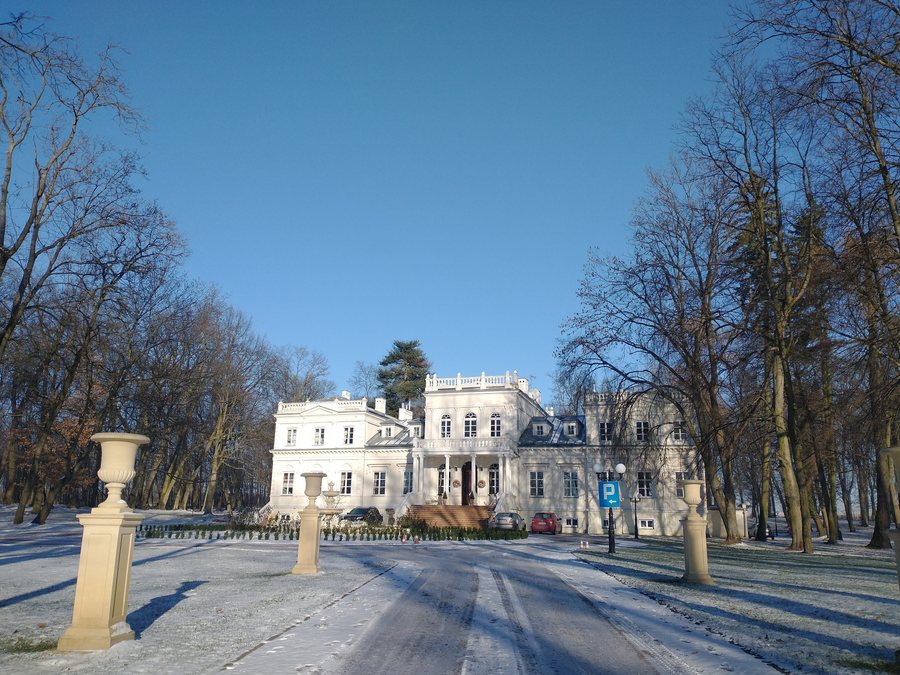 File:MOs810 WG 30 2023 (Palace in Wola-Chojnata) (2).jpg
Photo: MOs810 via Wikimedia Commons, CC BY 4.0
Palace and architecture
The Neo-Renaissance palace was designed by the architect Henryk Marconi. This gives you two specific reference points for placing it in an architectural context: its style and the name of its designer. Neo-Renaissance refers to the later revival of Renaissance forms, so you can place the palace within a design tradition without having to work through technical terminology. The reference to Marconi makes the question of design tangible: an architect designs, and a building gives that design a concrete form. If you are travelling with children, this can become a conversation topic for everyone: What does a style describe, and what does the architect’s name tell you? This makes architecture an accessible guiding thread.
Granary and fish ponds
The palace complex includes a brick granary, which stands next to the palace. The granary is a different type of building from the palace. Having them side by side offers a second perspective on the complex, rather than viewing the place solely through the palace. You can consider it by switching between two questions: How is the palace designed, and what purpose does the granary’s name suggest? This contrast makes the combination an interesting subject without equating the two buildings.
Fish ponds lie opposite the palace, where fresh fish is often available. This makes fish another local option to consider when planning, though it is not guaranteed to be available on every day of your trip. If you want to make use of this option, it is best to check in advance. There is also a restaurant in the palace. Check whether the restaurant is available before travelling if you would like to eat there. This way, you can take your architectural interests and practical options into account separately.
Wola-Chojnata as a travel destination
A route through the Rawa region ends in Wola-Chojnata. This makes the place interesting not only for its local buildings, but also as the endpoint of a regional tour. Check the specific route details before setting out. If you are looking for a holiday apartment, first decide on your travel focus: should Wola-Chojnata itself, with its palace, granary and ponds, be the main focus, or are you planning to visit it as the destination at the end of the route? This distinction can help structure your search. Then compare specific holiday apartments based on which location and conditions suit your plans.
Discover more destinations
Discover more destinations: Biała Rawska, Rawa Mazowiecka.
Back to the higher-level travel overview: Rawski.

