
Darbėnai: Church Art, Local History and Crafts
Accommodation in Darbėnai
Darbėnai can be explored through several specific cultural themes: sacred architecture, the town’s stone history, memories of partisans and deportees, and textile crafts. The Petrinės and Povilinės celebrations also have a fixed connection to late June. If you are looking for a holiday apartment for a stay in Darbėnai, you can first consider whether architecture, local history, crafts or a seasonal event should be the focus of your trip.
Church Art and Architecture
The church complex of the Holy Apostles Peter and Paul in Darbėnai was recognised as a state-protected cultural asset in 2005. The chapel at the intersection of Kretingos and Rožių streets has a clearly defined architectural style: it is neo-Gothic, built of red brick masonry and plastered. The chapel also houses a polychrome wooden Crucifixion sculpture carved by a local folk artist. Architecture, materials and figurative folk art come together in the chapel—three specific aspects that draw attention to sacred art.
Local History and Remembrance
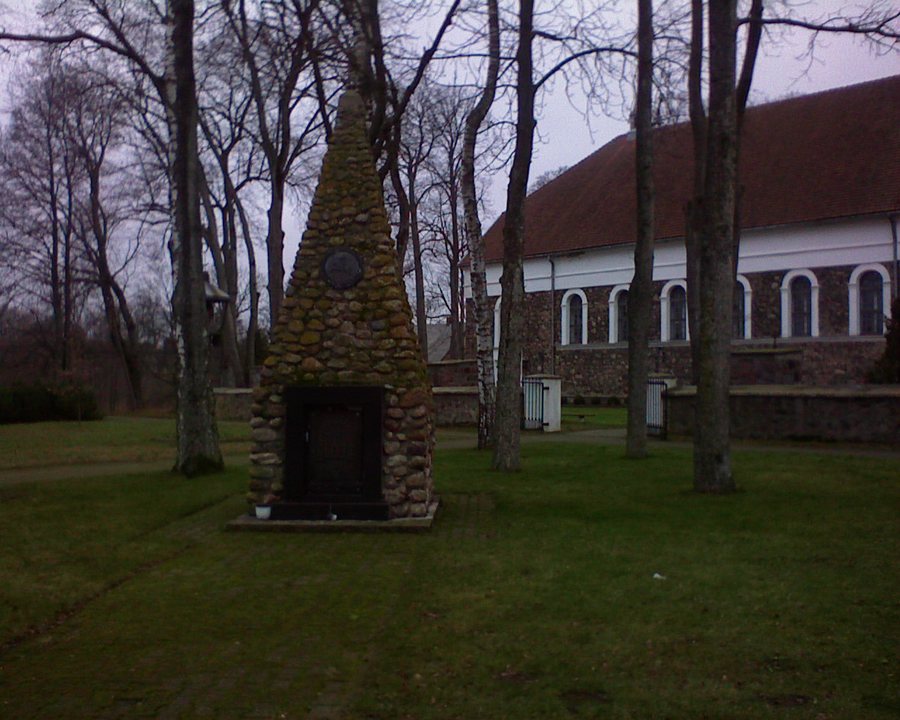
The Darbėnų metrika combines a stone structure with local and parish history. Erected around 1992, the fieldstone monument bears four information plaques. They cover the history of the town and its church parish, name villages that disappeared from the former Darbėnai district, and list villages that today belong to the Darbėnų eldership. The plaques were renewed in 2019; the local, church and parish history, as well as the names of former and present-day villages, are written in the Samogitian language. The comparison between vanished villages and the places assigned to the eldership today gives the site a temporal dimension.
A monument in Darbėnai commemorates the partisans of the “Kardas” unit of the Samogitian district who died between 1945 and 1965. The dedication names both a specific unit and the period being remembered. Another perspective on deportees and partisans is offered by a personally assembled collection donated to the school by Stanislovas Burba, who was born in Darbėnai. It includes photographs, letters, books, recorded recollections and objects. While the monument commemorates a particular partisan unit, the collection brings together personal documents and items relating to deportees and partisans.
Textile Crafts and Traditions
The Textile Crafts Museum was established on Vaineikių Street. In Darbėnai, textile artisans Daiva and Arūnas Dudėnas maintain an exhibition of hundreds of woven sashes and towels in rooms on the first and second floors of their house. This gives crafts a dedicated place alongside architecture and local history. If you would like to visit the exhibition, arrange your visit with the centre in advance.
The Petrinės and Povilinės celebrations also shape Darbėnai’s cultural calendar. This indulgence feast dedicated to the Apostles Peter and Paul brings the community together in late June. If you are planning your trip around the event, check the local arrangements in advance. Vytautas the Great Park is also in Darbėnai, adding a park to the list of named sites. When looking for a holiday apartment, you can weigh up whether to focus your trip more on the cultural themes or on the seasonal celebration.
Discover More Destinations
Discover more destinations: Kartena, Dupulčiai, Rūdaičiai, Šlaveitai, Laukžemė.
Return to the main travel overview: Kretinga District Municipality.

