
Holiday apartment in Dudar: church, nature and local cuisine
Accommodation in Dudar
Dudar combines local history with a forest-rich landscape and culinary traditions. The church, mountains, historic sites and festival culture are located at different spatial levels. The geographical classification ranges from the village itself to the wider regional surroundings.
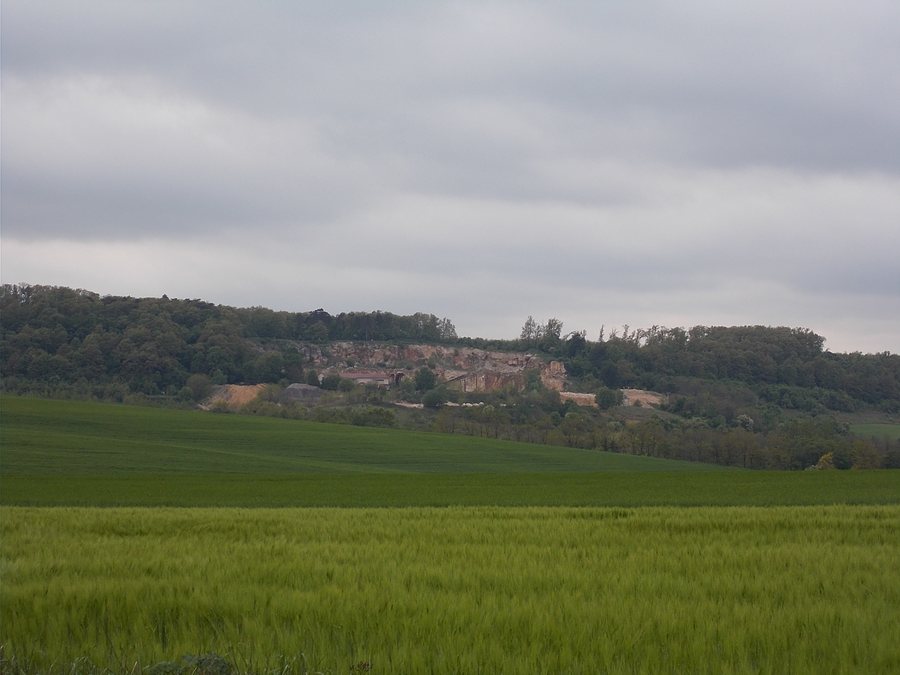 Dudar - látkép a község határában, a falutól északkeletre, a Dudar-Csetény útról
Photo: Szeder László via Wikimedia Commons, CC BY-SA 4.0
Dudar - látkép a község határában, a falutól északkeletre, a Dudar-Csetény útról
Photo: Szeder László via Wikimedia Commons, CC BY-SA 4.0
Holiday apartment in Dudar between church and cultural heritage
The Reformed Church of Dudar is at the centre of the village’s history. It is a protected monument and also an archaeological site. Dudar’s present-day Reformed Church was built in 1798. A Gothic pointed-arch portal is set into its eastern wall. Those interested in culture can explore the village’s history through this church building and its specific architectural details.
Forests, mountains and the character of the landscape
Dudar is surrounded by forests and rich in natural assets. Most of the area around Dudar is covered by sedimentary rocks formed during the Eocene. The visible forest landscape therefore has a geological background that dates back to the Eocene. The geological epoch known as the Eocene is part of Earth’s history and refers to the period when the sedimentary rocks in the area around Dudar were formed. Several mountains lie in the surroundings of Dudar: Cuha-hegy, Zörög-tető, Tunyog-hegy and Csengő-hegy. Ördög-árok is also easily accessible from Dudar. For planning day trips, the four mountains and Ördög-árok can be considered separate destinations in the area around Dudar. Depending on the focus, the surroundings of the village can be divided into forest landscape, geological substrate, mountains and the easily accessible Ördög-árok.
Cultural sites around Dudar
Count Csesneky Castle is located in the immediate vicinity of Dudar. The wider regional surroundings of Dudar also include the historic site of Esegvár and the ruins of Csókakői Várrom. Count Csesneky Castle belongs to the immediate vicinity, while Esegvár and Csókakői Várrom are part of Dudar’s wider regional surroundings. This geographical gradation can be taken into account when planning excursions: a destination in the immediate vicinity remains distinguishable from a place in the wider regional surroundings. Those interested in different historic sites can distinguish between a castle, a historic site and ruins.
Local cuisine and festival traditions
Dudar’s culinary traditions include traditional dishes prepared there. The local food culture in Dudar also includes pear brandy made by local residents and walnut beigli baked for festive occasions. The Körte- és diófesztivál was held in Dudar for the fourth time. At this festival, the Nánai dalnokok, the dudari énekkar and the dudari néptánccsoport performed. The performances by the three groups provide the Körte- és diófesztivál with an additional musical and dance setting. In Dudar, local products and the performances by the three groups form part of a shared festival context.
For further orientation, you can also visit Zirc, Csetény, Lókút, Pénzesgyőr, Borzavár, Bakonynána, Eplény and Olaszfalu.
For the higher-level travel overview: Zirci.

