
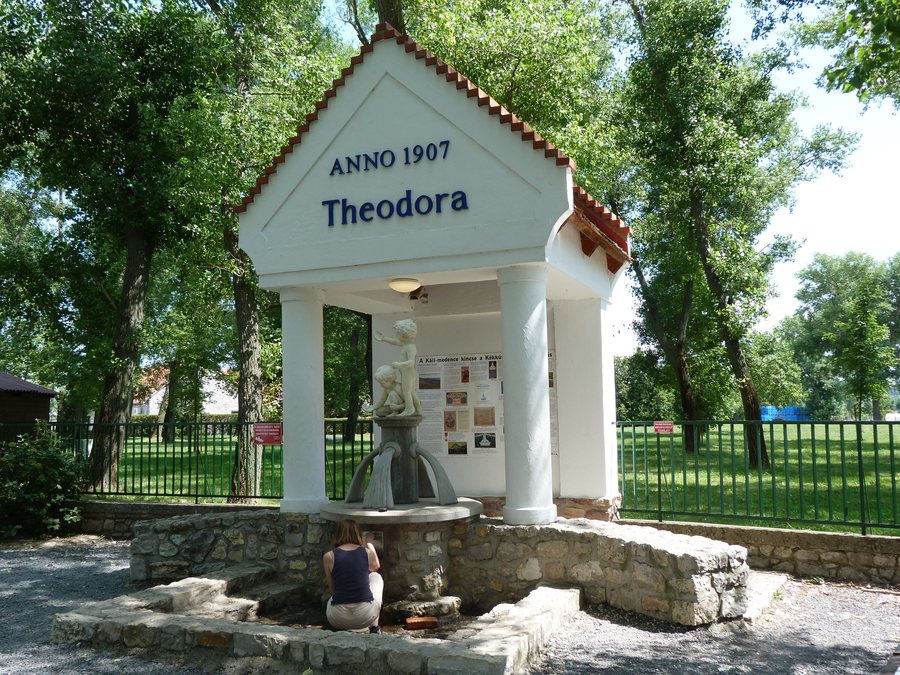
The Theodora Educational Trail can be visited free of charge all year round. Information boards in English make it easier for foreign visitors to find their way along the trail.
Kékkút is a destination where some travellers may wish to rent a holiday apartment.
Nature
Today, the Theodora Spring, with its tall, shade-providing trees and benches, is a popular resting place for walkers and cyclists.
Culture
The Church of Szent Dömötör in Kékkút was built in 1716; its present Baroque form dates from 1760.
The Kékkúti Tájház is located in the oldest house in Kékkút, a vernacular architectural monument and residential building from the 18th century that the Egyed family had built in 1799. It is furnished in an 18th-century residential building with a smoke kitchen and thatched roof, as well as in the adjoining stable. There, visitors can learn about peasant household management, material culture and agriculture in the early 20th century.
History
The bottling of Kékkút mineral water began in 1907. The water of the Theodora Spring has been known since Roman times.
Other places: Revfülöp, Káptalantóti, Badacsonytördemic, Szentbékkálla, Kisapáti, Ábrahámhegy, Nemesvita, Nemesgulacs.

.JPG)