
Ólmod: Village History and Alpannonia-Light Route 7
Accommodation in Ólmod
Ólmod combines insights into village history with a clearly defined route. The birthplace of Mersich Ignác houses a gallery and the Gyökerek local history collection; it is also the starting point of Alpannonia-Light Route 7. This means culture and outdoor activity can be considered as separate priorities when planning your holiday.
Village history and a special detail
The Gyökerek collection displays old furnishings, traditional costumes, items of clothing and everyday objects. It also features a permanent exhibition of paintings about the history of the village. The birthplace thus brings together different ways of remembering: everyday objects and clothing give the collection a tangible dimension, while the paintings focus on the village’s history.
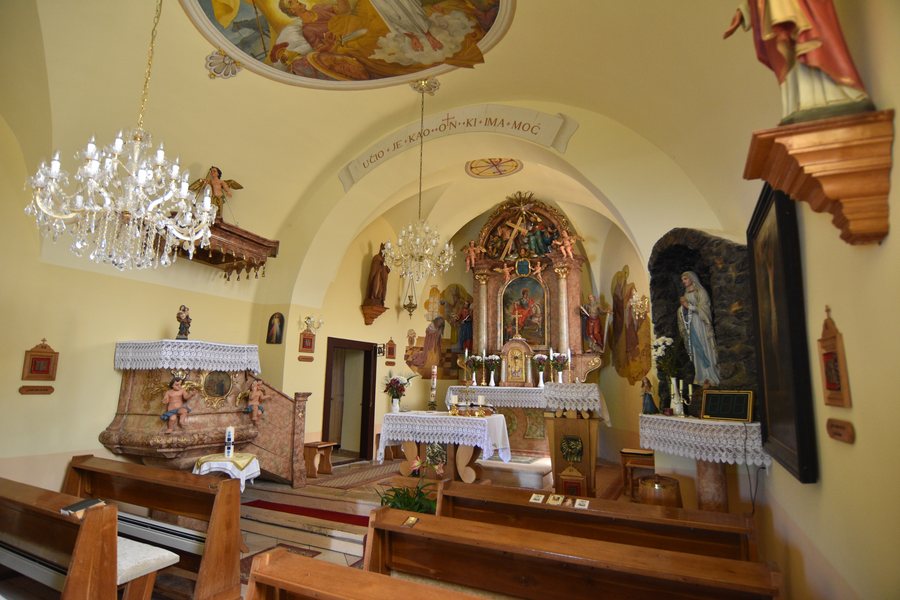
A single work of art awaits you as another cultural point of interest in St. Martin’s Church: a carved wooden statue of Saint Martin as a bishop stands on its north wall. Compared with the extensive local history collection, this work is a focused detail that complements the local culture with a religious depiction.
The route and holiday planning
The 6.5-kilometre Alpannonia-Light Route 7 starts at the Gyökerek local history collection in Ólmod. It passes the Belovich Chapel and Kőszegi Őz-kút, then runs via Ólmod back to Ólmod. The route takes about two hours. Its stated distance and duration make it easy to fit into your day’s plans.
Ólmod therefore offers two different points of interest: you can explore the village’s history through the collection and painting exhibition, or consider including a route with named stops in your plans. If you are looking for a holiday destination that suits one of these interests, you can focus your search for a holiday apartment on Ólmod.
In the wider Eisenburg destination
The wider Eisenburg area offers other landscape-related attractions. Írottkő Nature Park lies in the northwestern part of Vas County and includes the entire 4,303-hectare Kőszeg Landscape Protection Area. Őrség National Park was established on 1 March 2002 to preserve and present the natural, ethnographic and cultural-historical values of Őrség.
Cycling and thermal baths are also part of the wider Eisenburg destination. The Termál Kerékpáros Túraút combines cycling with visits to architectural and natural attractions and other spas, and takes visitors to five spa complexes in Vas County. Two internationally recognised thermal baths are located in Bük and Sárvár, 25 kilometres apart. Bükfürdő lies where Alpokalja meets Kisalföld, two kilometres from the small town of Bük; it is an independent medical and tourism centre as well as one of Hungary’s spa towns.
The cultural offering in Eisenburg also includes the Vasi Skanzen, which presents the rural way of life and folk architecture of Vas County from the past two centuries. Since opening in 1973, it has rescued and rebuilt 43 structures from 27 settlements. Two other historical dates relate to separate religious buildings: St. Michael’s Church in Csempeszkopács was built in the Romanesque style around 1250; the Romanesque church of Ják Abbey was consecrated in 1256.
Regional products are featured at Natúrbolt, in Jurisics Castle in Kőszeg. Kőszeg wines, especially red wines, Hegyalja rapeseed and chestnut honey, gingerbread, and jams and syrups from Lukácsháza are displayed and sold there. For dining recommendations, the Vas County tourism association also provides travellers with a countywide gastronomic map and an online search for recommended restaurants and wineries.
Discover more destinations: Cák, Velem, Lukácsháza, Kőszeg, Horvátzsidány, Gyöngyösfalu, Bozsok, Nemescsó.
See the wider travel overview: Kőszegi.

