
Gór: River Landscape and Celtic History
Accommodation in Gór
Gór combines a strong connection to nature with two very different historical themes. The Répce and its associated marsh meadows touch the area from the north; in the village, there is also a Celtic fortification and the listed Guary family castle. When looking for a holiday rental in Gór, you can decide whether the river landscape, early history, or the castle should be the focus of your trip.
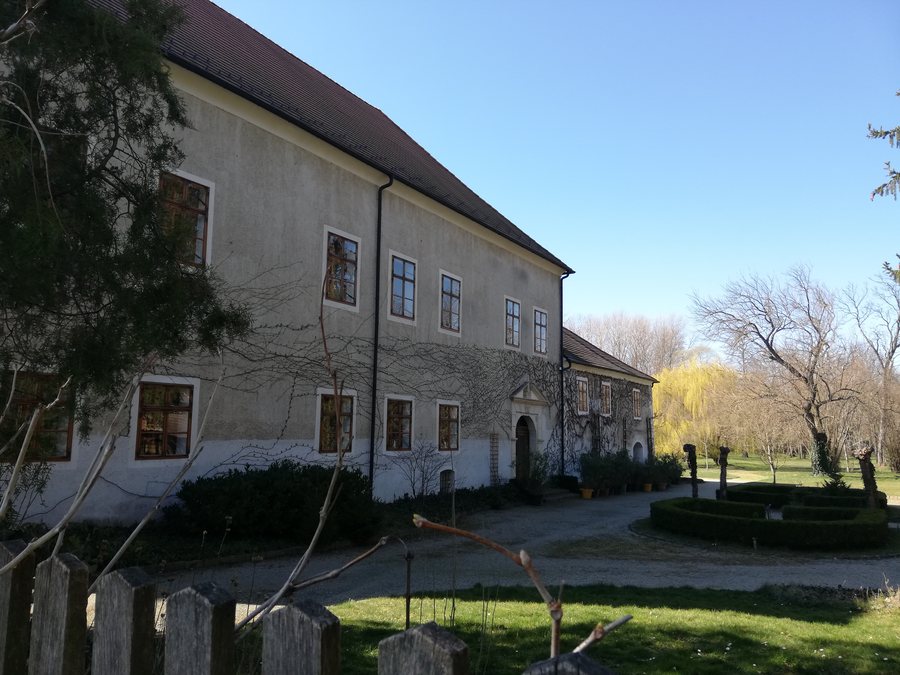 Gór, the former Guary Castle's eastern facade and part of the ornamental garden
Photo: Solymári via Source, CC BY-SA 4.0
The Répce and Nature Conservation
The Répce is an important natural asset for Gór and also a cultural heritage feature that shapes the landscape. The river and its associated marsh meadows touch the area from the north. In addition, areas of special importance for nature conservation touch Gór; they fall within the jurisdiction of the Fertő-Hanság National Park Directorate. The river, marsh meadows, and nature conservation thus form a distinct nature-focused theme alongside the village’s historical attractions.
Celtic Fortification and Castle
Around 330 BC (± 60 years), the Celts enclosed the site with a hillfort on a 2.5-hectare summit plateau in Gór; remains of the fortification are still visible on the surface today. The size of the plateau and the surviving traces provide two concrete reference points for the site: its extent and its continued visibility. The listed Guary family castle stands on foundations dating from the 15th century. In contrast to the Celtic fortification, it represents a much later historical landmark.
Route and Regional Setting
The “Látványos élménytúra” route runs from Bük (Bükfürdő) through Bő, Gór, Szeleste, and Répceszentgyörgy, then returns to Bük (Bükfürdő) via Gór and Bő. Gór is therefore both on the route through the named villages and on the return leg. If you include the route in your plans, check its current course and conditions, as these may change.
Vas County as a Wider Regional Setting
In the wider destination of Vas County, former watermills have been preserved along the Répce. The Vasi Skanzen focuses on rural life and the folk architecture of Vas County over the past two centuries; since opening in 1973, it has rescued and rebuilt 43 buildings from 27 settlements. Thus, alongside Gór’s Celtic fortification and castle, the wider region offers further historical perspectives on rural life and the county’s architectural heritage. Another architectural period is represented by St. Michael’s Church in Csempeszkopács, built in the Romanesque style around 1250, and the Romanesque church of Ják Benedictine Abbey, consecrated in 1256. The Termál Kerékpáros Túraút takes visitors to five thermal bath complexes in Vas County, combining cycling with visits to architectural and natural attractions and other thermal baths. Bükfürdő, the start and finish point of the “Látványos élménytúra” route, lies where Alpokalja and Kisalföld meet, two kilometres from the small town of Bük. It is an independent medical and tourist centre and one of Hungary’s spa towns.
Discover more destinations: Bük, Simaság, Csepreg, Lócs, Bő, Mesterháza.
See the broader travel overview: Csepregi.

