
Tolna between blue-dyeing tradition and Danube backwaters
Accommodation in Tolna
Visitors choosing to stay in Tolna will find several reasons to explore the town: a long-standing blue-dyeing tradition, the town’s history presented interactively, and the Danube backwater landscape on the outskirts. There are also activities around the Holt-Duna, which involve different planning considerations. Culture and nature offer two distinct focuses for planning your trip. When looking for a holiday apartment, you can first consider whether you would like to discover Tolna mainly through its crafts and history or through its water and landscape.
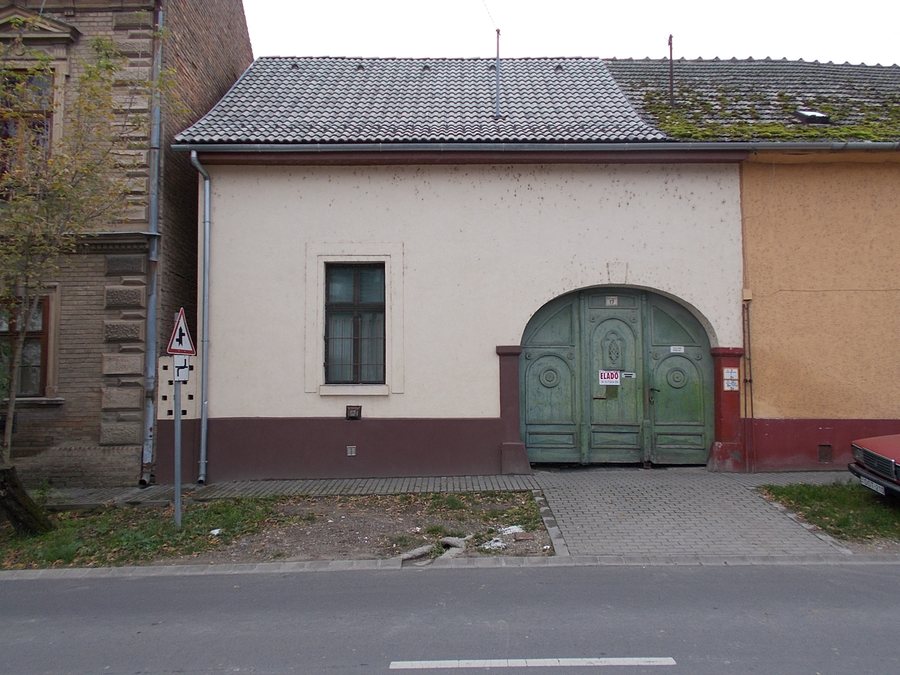 File:Kossuth Lajos Straße 17, 2023 Tolna.jpg
Photo: Globetrotter19 via Wikimedia Commons, CC BY-SA 4.0
Blue-dyeing and town history in Tolna
Founded in 1810, the Tolnai Kékfestő Műhely continues the blue-dyeing tradition. Members of the sixth and seventh generations work there. This gives the workshop a precise historical connection and a craft that continues to be practised in Tolna. For travellers interested in local traditions, this combination is a distinctive cultural theme.
The MAG-Ház offers a broader look at local cultural heritage, presenting the town’s history and culture interactively. Its topics range from grain farming and shipping to river regulation and the Danube backwaters. Economic and maritime history are thus presented alongside questions concerning the river and landscape. If you would like to explore different facets of the town’s history as well as blue-dyeing, you will find a cultural focus here with a different emphasis.
Danube backwaters and activities on the Holt-Duna
The Tolna Danube backwater is a natural asset on the outskirts of the town. The separation of the large river bend near Tolna was completed in 1852, giving the landscape a specific historical connection as well. The Holt-Duna is suitable for kayaking. A special tourist offer also mentions a canoe tour on the Holt-Duna water trail. Check whether this tour is currently being offered before making plans.
Ice skating is also possible there. However, global warming means that safe ice is forming there less and less often. Skating therefore depends more on a particular condition than interest in the waterscape itself. If you would like to plan this activity, bear in mind that safe ice cannot be relied upon.
The local themes thus lead in different directions: blue-dyeing and town history provide a cultural focus, while the Danube backwaters and Holt-Duna appeal to visitors interested in nature and water. When looking for a holiday apartment in Tolna, you can use these priorities as a starting point and shape your stay around the experiences that matter most to you.
More to explore in the wider Tolnau destination
The wider Tolnau destination also offers further, distinct themes. Tamási Termálfürdő has a sauna world, leisure pools and medicinal water. As specific facilities and operating arrangements may change, check the latest visitor information before planning your visit. Another regional nature highlight is the Pacsmag Lakes, which form an important Hungarian habitat for the strictly protected ferruginous duck.
In Szekszárd, the Babits Mihály Memorial House is located in the more than 200-year-old Kelemen House. It is a literary-historical memorial site. Also in Szekszárd, the Wosinsky Mór Museum is open to visitors daily from 10:00 to 17:00, except Mondays; opening hours may vary on public holidays. If you are planning a visit on a public holiday, it is worth checking the hours in advance. Pipo Castle, built by Filippo Scolari, who came from Florence, adds another historical dimension to the wider Tolnau destination.
Discover more destinations: Zomba, Fadd, Alsónána, Bátaszék, Medina, Sechshard, Szálka, Öcsény.
Back to the main travel overview: Szekszárdi.

