
Bélapátfalva: Abbey history and trails on Bél-kő
Accommodation in Bélapátfalva
Bélapátfalva combines impressive Cistercian architecture with a nature trail on Bél-kő and the recreation area around Gyári-tó. Local crafts and places of remembrance are also part of the town’s stories. You can tailor your trip to focus on architecture, hiking, nature or history.
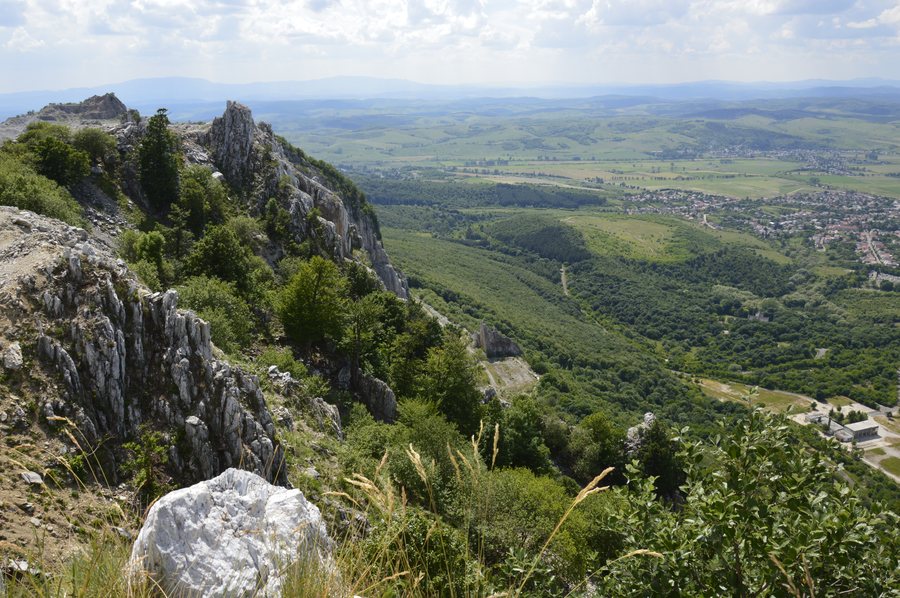 File:Rocks, Bélapátfalva, Hungary - panoramio.jpg
Photo: Mrcsifkin via Wikimedia Commons, CC BY-SA 3.0
Cistercian Abbey: Architectural Features and Art
At the foot of Bél-kő, Bishop Kilit II of Eger founded the Bélapátfalva Cistercian Abbey in 1232. Its late Romanesque features include robust masonry, a basilica-style floor plan and a stepped portal surround. Gothic rose windows meet a Baroque organ loft here—the abbey’s different architectural periods can be read in its structures.
Individual works of art also give the complex its distinctive character. The southern side aisle houses the Saint Emeric Altar, created in 1748 by József Hartmann, a sculptor from Košice, and an outstanding example of Hungarian Rococo art. The church organ was built in 1775 by Ferenc Szabó, an organ builder from Eger, and is still in working order. Those interested in architectural and art history can find details of sculpture and music alongside the building’s exterior.
On Foot on Bél-kő
The Bél-kő nature trail starts at the Cistercian Abbey and leads to a viewpoint at an altitude of 816 metres. The approximately five-kilometre route has seven stations and takes around two to three hours. The trail guide connects the area’s cultural history with the mountain’s geological structure, as well as plant communities and the protected flora and fauna of the rocky grasslands.
Bél-kő’s stepped, rocky appearance was shaped by mining in the past. This history adds a historical dimension to views of the mountain, alongside the geology and nature explored by the trail. Another hiking option is the Országos Kéktúra long-distance trail, which also passes through Bélapátfalva. While the nature trail’s length, number of stations and approximate duration are specified, the long-distance trail’s route through the town is itself a useful starting point for planning.
Lake, Crafts and Remembrance
Gyári-tó and its surroundings are considered a popular excursion and recreation area for locals and visitors. The lake has been used for fishing since 1979. So, alongside the hiking trails, water and relaxation are also options to consider during a stay in Bélapátfalva.
Another side of the town’s story is told by the Bélapátfalva hard-stoneware pottery: its distinctive folk decoration developed from 1866 under the direction of Sándor Dubravszky and his family. During this period, underglaze painting replaced overglaze painting. The former factory closed in 1927. The Hősök könyve (Book of Heroes) commemorates soldiers from Bélapátfalva who fell in the First and Second World Wars. It was handed over and consecrated in January 2017; the Gesztenyés Exhibition House is listed as its exhibition venue.
Chapel and Memorial in the Surrounding Area
Nearby is the Gilitka Chapel, also known as the Saint Anne Chapel. The listed Roman Catholic chapel is located in the valley of the Gilitka stream, on a section of the Országos Kéktúra between Bélapátfalva and Szarvaskő. Miklós Androvics, rector of the Eger seminary, had it built in 1750.
Bábafa is also associated with a memorial site: in 2010, a small shelter was set up as a memorial at the edge of the clearing next to it. Information boards bearing a commemorative message are displayed on its wall. An association organises a hike to Bábafa every spring during Születés Hete and again in autumn. Check the dates for the year of your trip.
Choose the Right Holiday Apartment for Your Interests
When choosing a holiday apartment in Bélapátfalva, it helps to first decide which experiences matter most: the abbey combines architectural history with the starting point of the Bél-kő nature trail; the lake and its surroundings offer excursions and relaxation, while the nearby chapel and Bábafa add further historical points of interest. If you are travelling with people who have different interests, these specific highlights can help guide your search for a suitable place to stay, without requiring every day to have the same character.
Discover More Destinations
Discover more destinations: Balaton, Nagyvisnyó, Bekölce, Szilvásvárad, Mikófalva, Mónosbél, Bükkszentmárton, Bátor.
Go to the main travel overview: Bélapátfalva.

