
Vitebsk Region: Lakes, Nature and History
Accommodation in Vitebsk Region
Lakes with islands and shallows, protected forest and wetland areas, and a rich museum history give the Vitebsk Region a variety of travel highlights. If you like to combine nature experiences with culture during your holiday, you can choose between Braslav Lakes National Park, the Berezinsky Biosphere Reserve and the museums in Polotsk. The best area to use as your base depends on which of these experiences you want to make the focus of your trip.
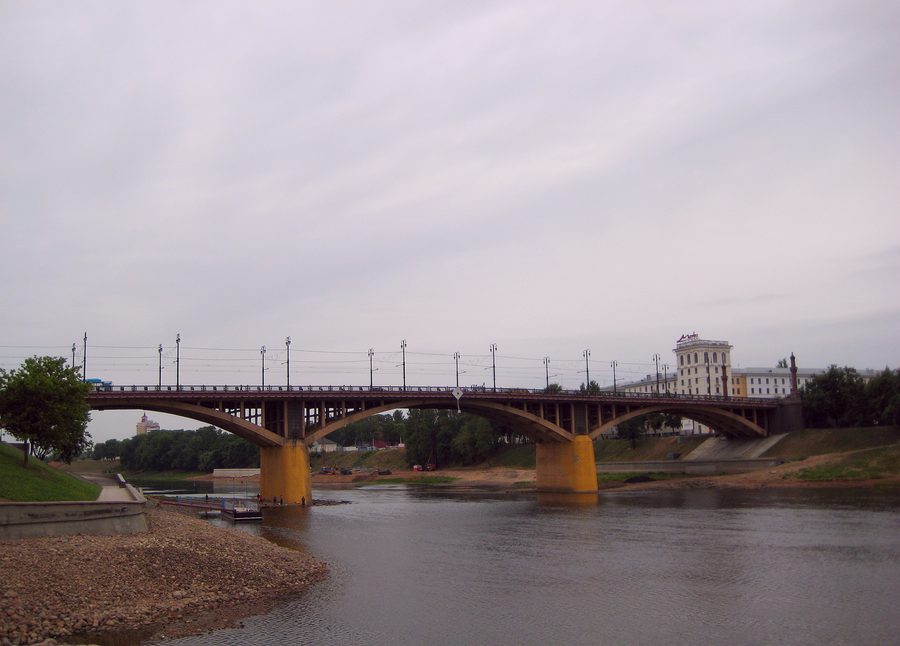 Kirovsky Bridge crosses the Western Dvina in Vitebsk, Belarus.
Photo: GAlexandrova via Wikimedia Commons, CC BY-SA 4.0
Kirovsky Bridge crosses the Western Dvina in Vitebsk, Belarus.
Photo: GAlexandrova via Wikimedia Commons, CC BY-SA 4.0
Forests and wetlands in the Berezinsky Biosphere Reserve
The Berezinsky Biosphere Reserve is a nature reserve of national importance. It preserves natural complexes of the mixed-forest zone of Eastern Europe, as well as unique forest and wetland ecosystems. An ecological forest trail passes through a range of habitats: mixed forest, secondary birch forest, pine forest and raised bog. The different sections bring the variety of the landscape to the forefront of your day in nature.
The biosphere reserve’s natural history museum is another option on site. It is open daily; from May to September, opening hours are 09:00 to 18:00, and from October to April, 09:00 to 17:00. This lets you plan your visit within the stated opening hours for the time of year you travel. The reserve also offers one- and two-hour horseback rides through the forest. If you would rather focus on the history of a landscape, a cycling route along the Serguch Canal offers a chance to learn about the construction of the Berezina water system and see how nature has reclaimed areas once used by people.
Lake scenery and activities in Braslav Lakes National Park
Mayak Hill lies in Braslav Lakes National Park, between Lakes Snudy and Strusto. From this viewpoint, you can see expanses of water, islands and shallows. The “Mayak Hill” ecological trail starts at the foot of the hill. This offers a nature outing focused on the landscape and the views.
Another focus is the “Slobodkovskaya Ozyovaya Ridge” ecological trail. It features rare glacial landforms and rare and protected plant species of Belarus. The trail also includes an archaeological settlement dating from the 7th century BC to the 6th century AD, as well as from the 11th to the 13th century AD. If you want to explore nature and the past together, this trail brings both together. The national park also offers excursions by tour boat or motorboat, as well as cycling and SUP outings.
The history of Braslav is another option: an official sightseeing route includes Zamkovaya Hill, a former fortified settlement dating from the 9th to the 18th century. The Braslav Museum of History and Local Lore has six halls with a permanent exhibition. For a trip focused on lakes and activities, these experiences make a fitting addition to the nature attractions.
Museums and history in Polotsk
The Polotsk National Historical and Cultural Museum-Reserve is a historic area in Polotsk, in the Vitebsk Region, and includes eleven museums. A landmark within it is St. Sophia Cathedral: this architectural monument dates from the mid-11th to the mid-18th century and houses the Museum of the History of its Architecture. The cathedral contains fragments of 11th-century masonry, an almost completely preserved floor plan or foundation, and frescoes from the late 11th century.
Other museums offer different perspectives on the city and the region. The Polotsk Art Gallery tells the history of the city and Belarus through religious and secular works of art. At the Museum of Traditional Hand Weaving of the Lake District, you can learn about flax cultivation and processing in the late 19th and early 20th centuries, as well as the weaving tradition of northern Belarus. The Polotsk Museum of Nature and Ecology is housed in a former water tower and introduces visitors to local fauna and the challenges of nature conservation in urbanised areas. The Museum of Military Glory offers an overview of Polotsk’s wartime history and the defence of the city in 1941.
The exhibition “A Walk along Lower Pokrovskaya” offers another historical perspective. It opened in May 1998 in Peter I’s House, an architectural monument dating from the 17th century. Using a 1910 historical guidebook, it presents the history of a street during that period. Belmont Park offers a different view of a designed landscape: laid out in the mid-18th century, it covers 62 hectares. At the “Drivyaty” restaurant, a gastronomic tour features pike-perch with vegetables and roast game.
Other subregions of the Vitebsk Region
For regional orientation, you can also explore Puśki, Strusto, Moiseevo, Talachyn District, Ushachy District, Polacki rajon, Vuscie, Zastadollie, Perevoz, Zyabki, Lisna, Drykollie, Lyntupy, Hlybokaje, Kryvoje 2, Miory, Vitebsk, Navapolatsk, Polotsk, Orsha District, Verkhnedvinsk, Noŭka, Rasony, Senno, Sharkaŭshchyna, Pastavy, Lepel District, Hili, Braslau, Dubroŭna and Domniki.
For the broader travel overview: Belarus.

